Take Your Mortgage With You? Portable vs Assumable Loans.

Today’s Interest Rate: 6.36%!
Another Skeptical Investor article?
YES! This week you get TWO! Articles.
You lucky ducks.
Why?
I’m doing a little travel, today I’m in Deutschland. Hamburg, home of the original hamburger. And then a hop and a skip to Istanbul for a bit. Back in the Nashville saddle in 1.5 weeks. So, next week you will get a break from my insights, inferences, implications, ideations and, of course, rantations.
This week, we’re talkin’ Fed interest rate cut, and I dive deep on assumable and portable mortgages. Like really deep.
Let’s get into it.
The Weekly 3 in News:
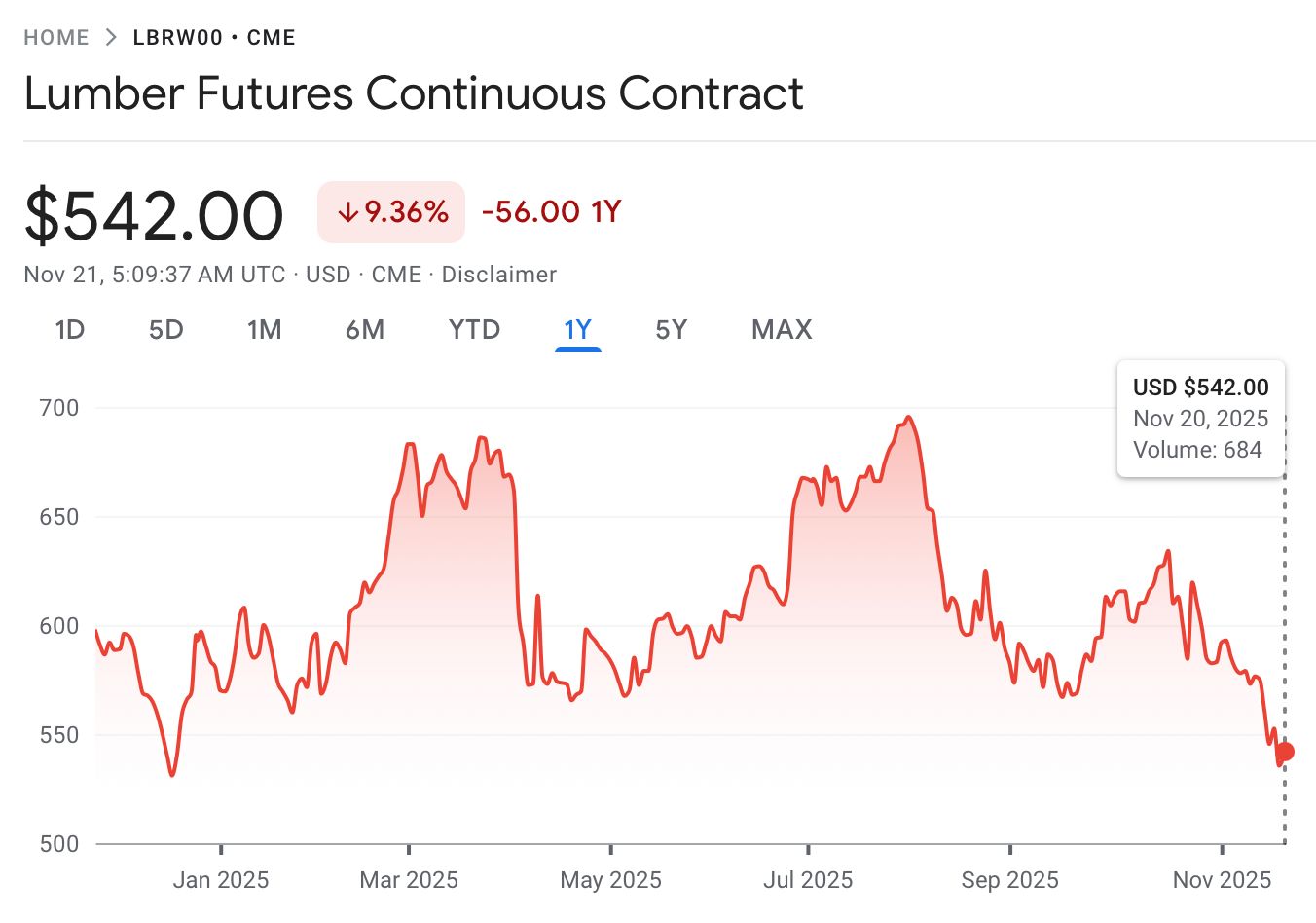
Lumber Prices Continue Downward. Lumber futures are trading around $535–546 per 1,000 board feet. Way, way down. -12% over the past month and year. For comparison, the peak was $1500/bf in 2021.
Embattled former Fed governor Adriana Kugler resigned from the central bank after preparing to submit financial disclosures for 2024 that Fed officials could not certify because they included several prohibited activities, including: buying individual stocks (not allowed), moving in and out of those stocks within weeks (not allowed), doing so in FOMC blackout periods (not allowed). Yet Congress can still do all of the above. Yuck (WSJ, Timiraos).
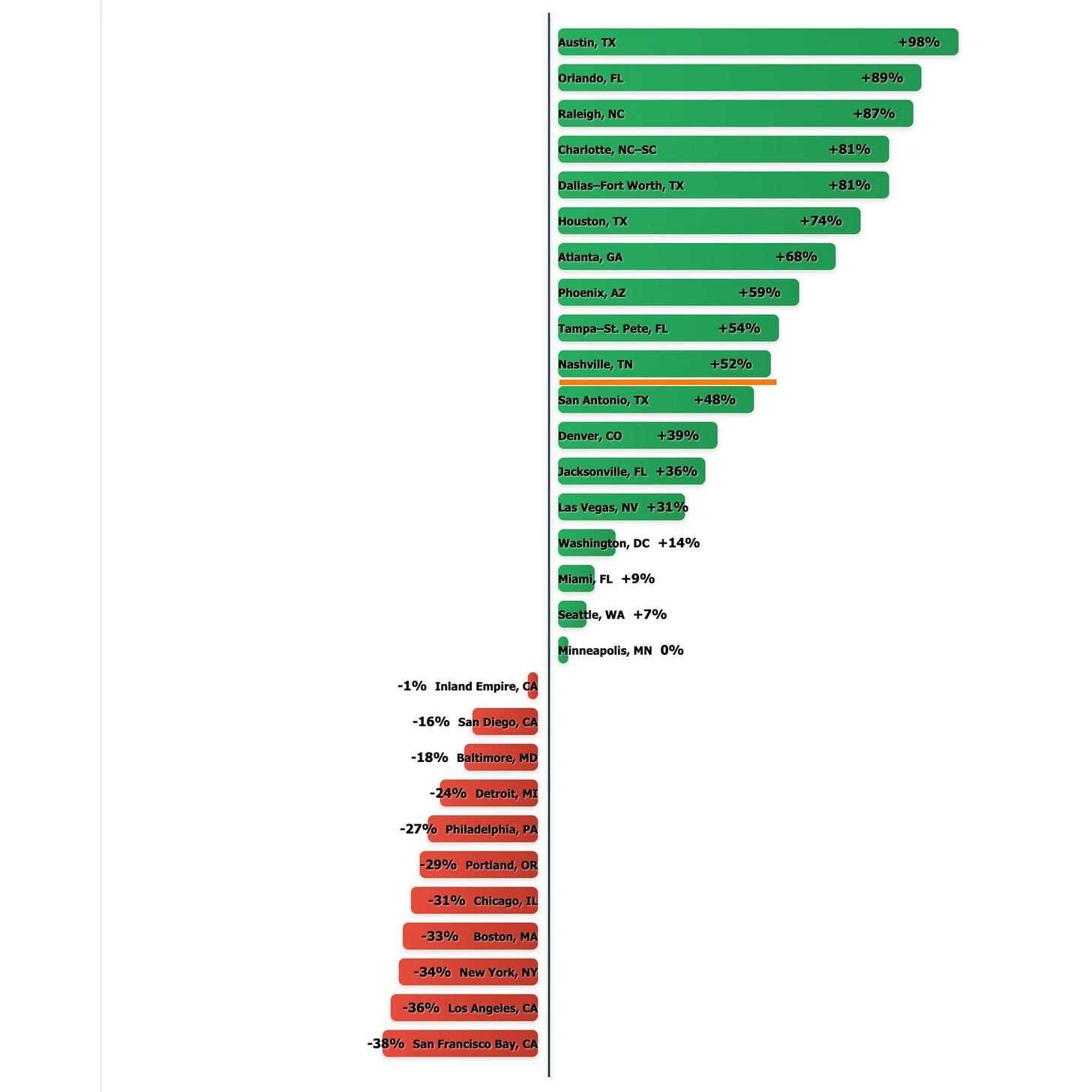
Nashville News - Nashville is Baby Booming! Not only have folks been flocking to Nashville to make a new home, they have been putting the bedroom to good use. The children under 5 population has exploded in Nashville, up 52%! A boon for future growth. And there are some even bigger winners: Austin +98%, Orlando +89%, Charlotte +81%. And losers: SF -38%, LA, -36%, and Boston -33%. Not coincidentally, the cities in the green are also where: unemployment is low, people are moving there, tenant/landlord laws are in balance, and, importantly, the most housing has been built. And the opposite for those in the red. (Fijan/Census).
In other words, Build Housing = Make Babies = Growth.
Über-Quick Fed Rate Cut Update:
We FINALLY got a jobs report yesterday, Yay! Which showed… well, it wasn’t totally clear. If you are a bear or a bull, Democrat, or Republican, there was something for everyone in this report.
In short:
The economy grew +119,000 jobs, beating Wall Street analysts’ whisper expectations by 2x! BUT the trend is stagnant since April with little net growth. And 119k is a low-ish historical number, the average since 1980 is 126k.
Unemployment held at 4.4%, up a tick (.12%) from some forecasts and rising gradually from 4.1% a year ago. Labor market appears to continue cooling. This number is what was expected.
We got more negative job revisions of (god, we are bad at estimates), downgrading the jobs we thought we had created in prior months.
Job gains were mostly in health care and food services, while transportation and warehousing saw losses.
Payrolls are continuing to grow faster than inflation, but growth itself is weak, and has shown little net change since April 2025 (aka stagnant, not expanding meaningfully).
The only real problem? This was September’s data.
The second problem? (Ok I lied…) There won’t be another jobs report until after the next Fed meeting on Dec. 9-10 to determine whether or not to cut interest rates.
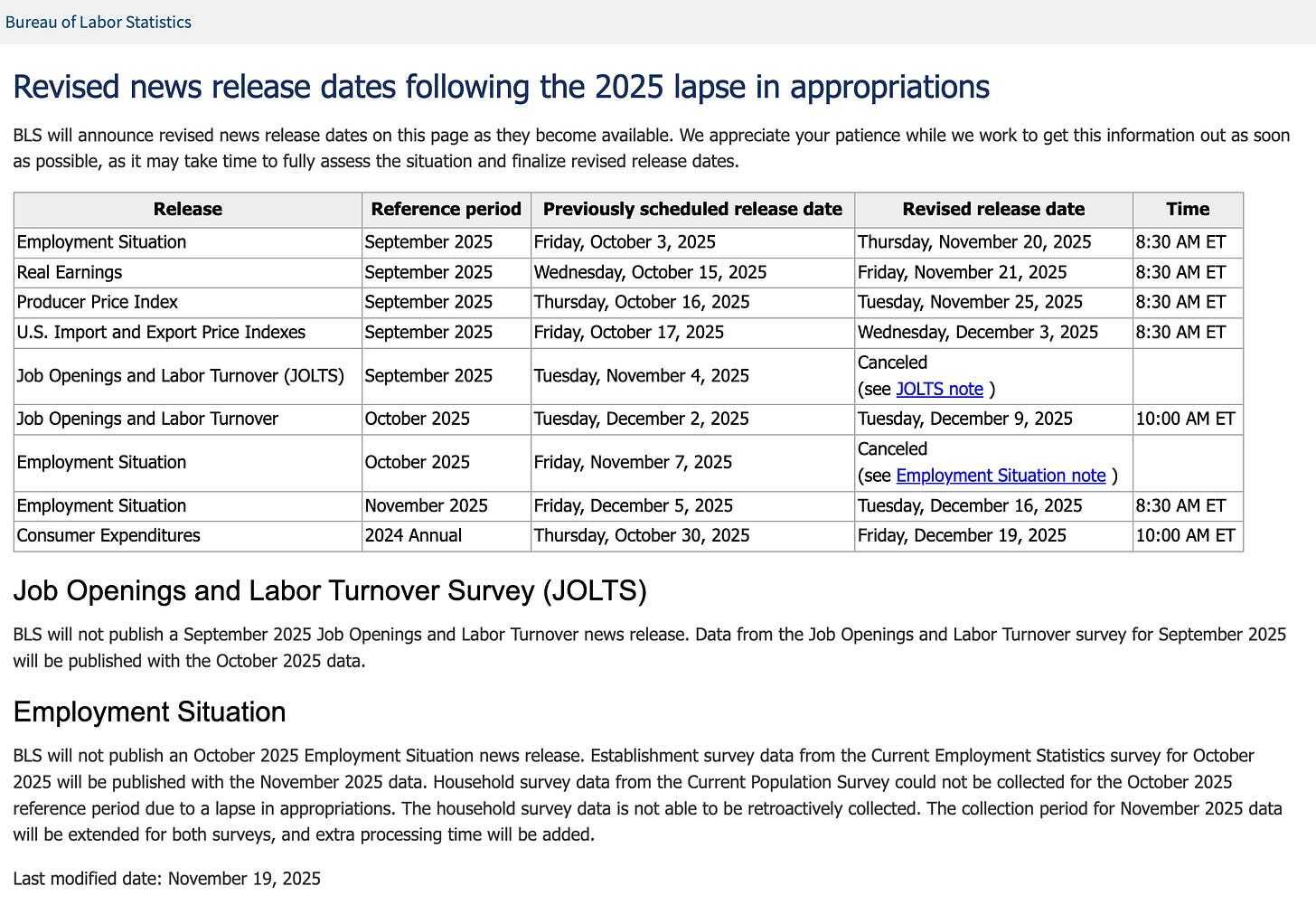
The BLS cancelled the October jobs report, and the November report won’t be published until Dec. 16.
The job openings/quits report (aka the JOLTS) for September is also cancelled. The Oct JOLTS will be published Dec. 9, so the Fed will have that just in time (they do get it a bit early tho) (Fed).
Does the Fed have Enough Data?
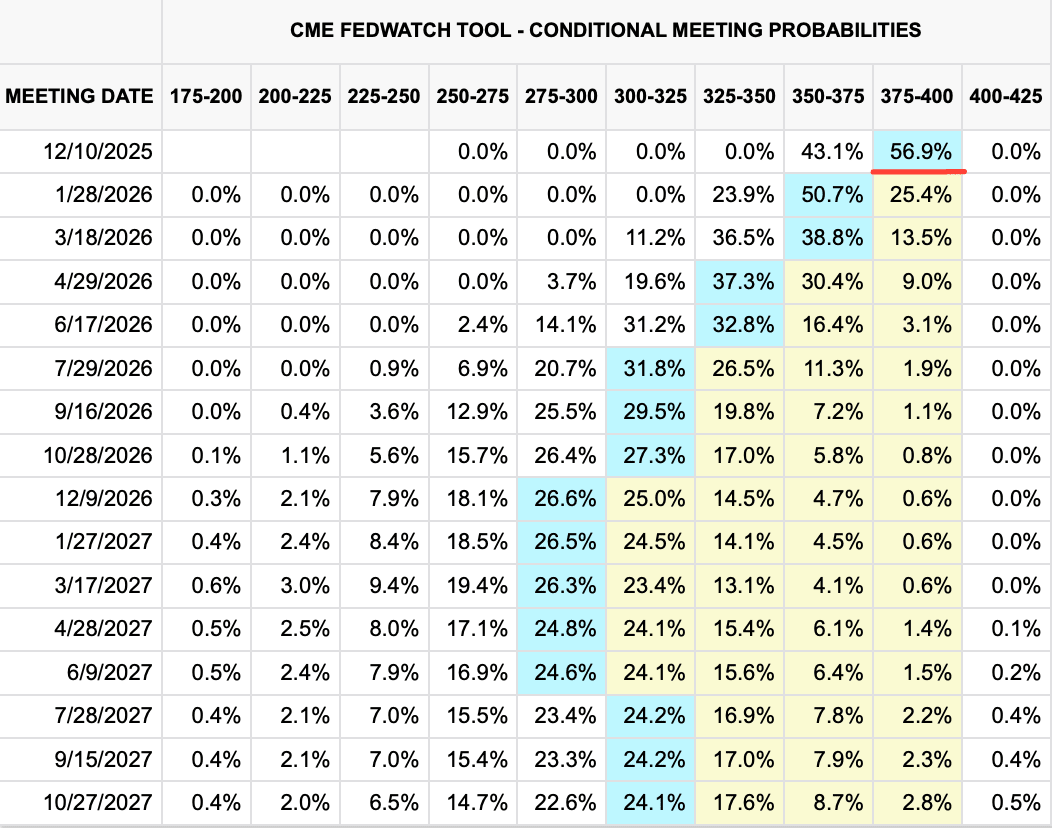
Now, to be fair, Fed officials have reiterated that they have enough information to do their job forecasting the economy and making interest rate decisions without this gov data. I’m skeptical, and the market agrees. Probabilities of a Dec rate cut fell on this news of “data decay.”
The Bond market is pricing in a 43.1% chance of a rate cut (56.9% no cut). This was the reverse just a few days ago.
The betting market too has flipped in recent days, now showing a slightly lower chance (32%) of a rate cut (66% no rate cut) (Polymarket).
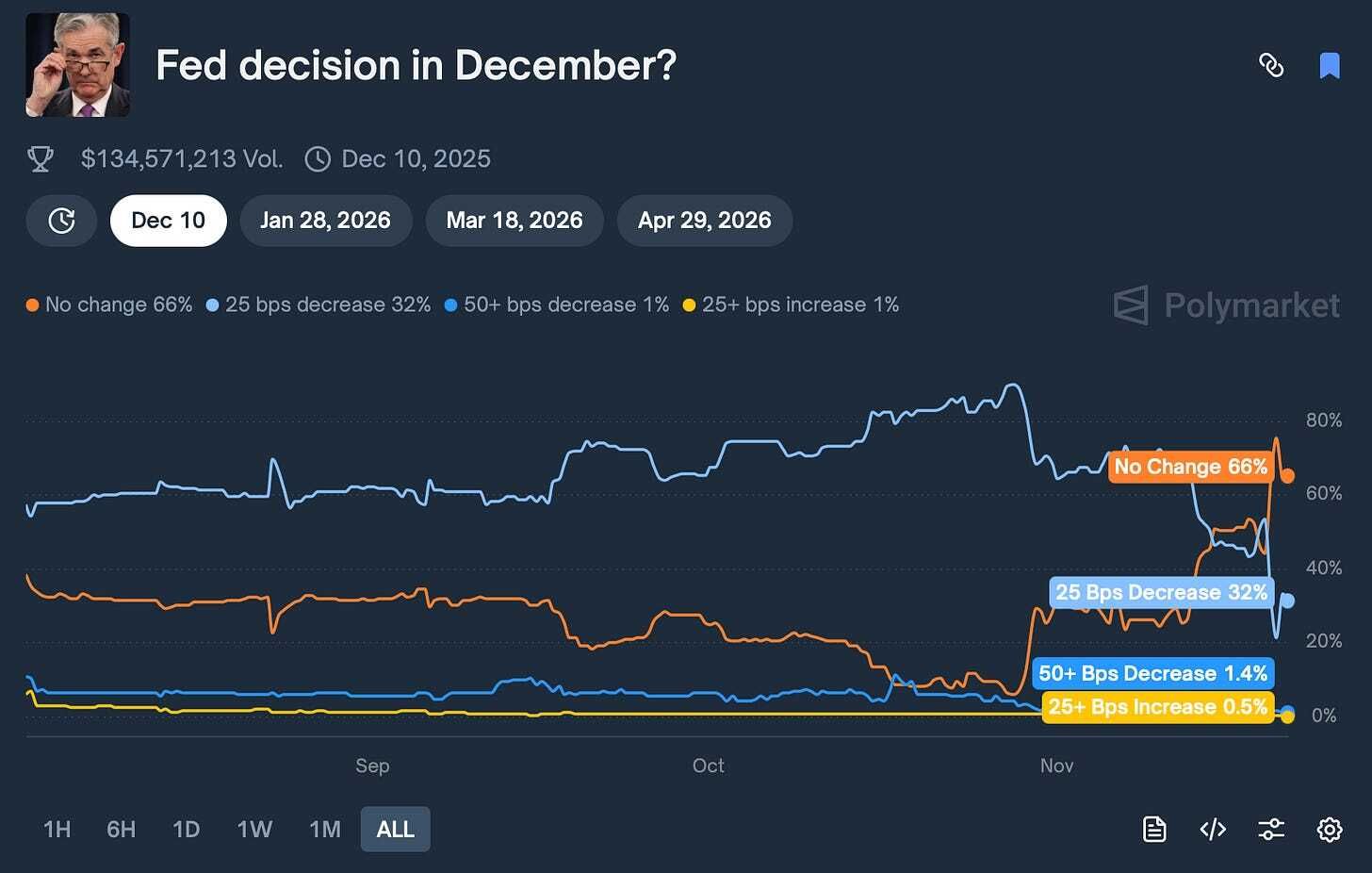
Big Change Since Yesterday
The volatility in the stock market has spooked people. Just yesterday, the numbers were worse: Bond market was pricing in a 31.8% chance of a rate cut (68.2% no cut). Betting market had a chance (28%) of a rate cut (69% no rate cut) (Polymarket).
Why Did This Happen?
Well, unless you were living under a rock - which I sometimes do, no judgment, it’s nice and cool - Congress was unable to fund the government for the start of the Oct 1st fiscal year and we were forced to endure a government shutdown for 43 days, which ended on Nov 12th.
The Bureau of Labor Statistics (BLS) staff were furloughed during this time. So they could not survey, tabulate, and analyze jobs data. And the report could not legally be published. The Establishment Survey and Household Survey were the primary sources of data, which could not be performed.
This is Why We Need Better Data
In my view, this only highlights the need for higher-fidelity reports from the private sector, not based on surveys but on real-time data from businesses.
It is a little ridiculous that we still rely on person-to-person surveys (literally 60,000+ phone calls) that must be performed to know how the labor market and economy are performing. What if Amazon needed to survey shoppers to know what sold on their platform, instead of software tracking it automatically?
We would think that is insane.
Well, that’s pretty much what the BLS still does.
Why not use software to capture real-time data? Why not contract to private industry operators to get anonymized / metadata? Why does this take thousands of BLS employees to perform these reports like a typewriter from when my parents were in middle school?
The entire process is antiquated and needs to go!
But I digress…
Ok, let’s switch gears to some related news: portable mortgages. Another way to keep interest rates and transaction costs down.
Portable and Assumable Mortgages?
Recently, Federal Housing Finance Agency Director Pulte made news when he said the agency was looking into allowing/facilitating mortgages that are portable.

So, what the heck is a portable mortgage? And what is this assumable mortgage I’m also hearing more about now?
A brief primer:
Assumable Mortgages
Want to buy a home?
Great, interest rates are ~6.3%. Yuck.
But the current owner/seller has a 3% mortgage, can I have that?
Oh, well it… no. Well…maybe. But, it depends.
Do they have an FHA / VA loan backed by the government? Then yes, you can assume that loan and get that rate! Just pay us a $1,800 assumption fee and the down payment.
If not, no. You have to get a new loan at current rates. And pay us a new loan origination fee (typically .5-1%).
The seller does not, they have a traditional, conventional loan.
Sorry, no dice.
In other words, an assumable mortgage is just that. In general, you can take over someone else’s loan, pay the bank (or title company) a down payment to replace the equity the homeowner has in the home (and/or a second mortgage if need to replace a large % of equity a homeowner may have), who, in turn, provides that to the seller so they can go on their merry way. FHA loans allow assumptions and charge a $1,800 fee to do so.
Again, this is possible today, but only on certain kinds of existing home loans. Need help finding homes that have assumable mortgages? There is an app for that.
Check out Roam (not a sponsor). Most of the homes are basic starter homes, but it’s actually pretty cool.
Portable Mortgages
Have a mortgage on your home?
Want to buy a new home?
Well, getting a new loan involves considerable transaction costs and, because of the zero-interest-rate policies of 2020-2021, most folks have mortgages with interest rates in the 2-5% range.
So, if I already have a loan on my current home, can I just keep that loan and swap the asset that secures that loan, from my current home to the home I want to purchase?
If your mortgage was portable. You could!
But alas, it is not. Sorry.
:( …
The Case for a Portable and Assumable Mortgages
The core pitch: Most buyers are sellers, and vice versa.
If you’re locked into a 2.8% rate from 2021, why sell and jump to 7%?
That hesitation is killing existing home supply—only 28 out of every 1,000 homes changed hands in the first nine months of 2025, the lowest turnover in decades per Redfin.
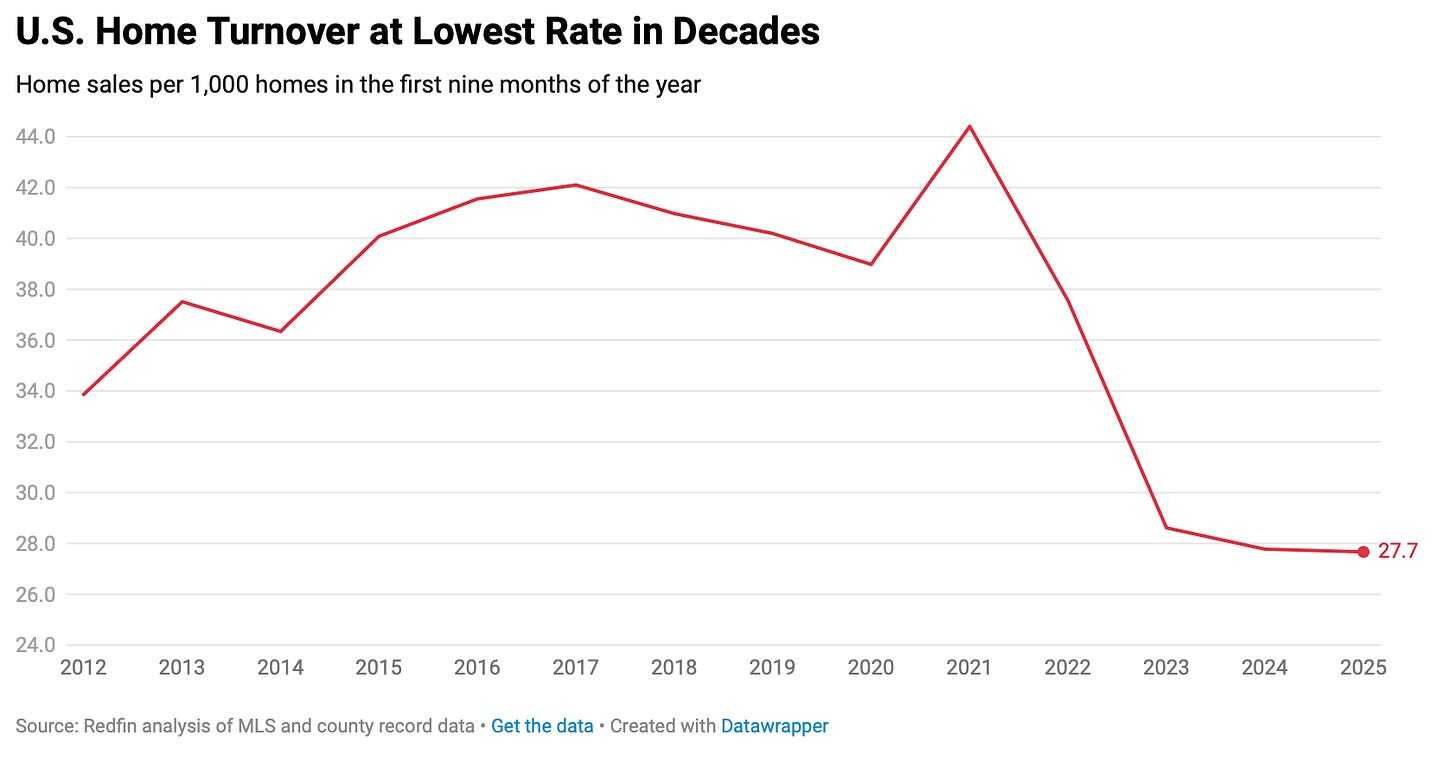
Portable/assumable loans would let you get far better terms so you can move where you want or upgrade to a better place, freeing up your old home for others.
The hope?
More existing inventory hits the market, easing the crunch for first-timers and boosting overall sales. Sure, inventory is higher today than last year, but we are still not back to normal. And in places like my home market of Nashville, that inventory is mainly new build/basic starter homes not value-add existing homes / multifamily we investors need. In fact, there is a dearth of existing homes for sale.
And in aggregate, including new households forming, we’re still short millions of units nationwide, with estimates around 4-5 million deficit (RedFin). This could help unlock some movement without waiting for massive new builds.
The Monthly Payment is King
Even if more homes flood the market, unaffordability stays high with high prices and rates. The median home price is $420k, up 2.2% year-over-year, per NAR. Inventory might rise, but without rate relief for new borrowers, it’s not a game-changer for entry-level folks. Rates are still at 6.3% and will likely levitate from here, as I have recently written about.
Assumable mortgages are a little tricky. Because a buyer wants to take over the loan from another person, who has a different credit rating, different savings amounts, different debt amounts, etc… their risk profile/actuary is different and thus, the bank should be allowed to charge an assessed amount and % rate based on the risk to the bank that the borrower defaults. Allowing all homebuyers to assume mortgages could then lead to a banking/housing crisis a la 2008 GFC. There is good reason to only allow this on loans that are already government-backed in case of default so as not to spread throughout the banking sector. As is done today. However, allowing a specific subsector of homebuyers to assume mortgages and providing government backing could make this an option for some, but not all. FHFA Director Pulte is “looking into this” but I bet they instead focus on less economically risky portable mortgages.
Speaking of which, the portable mortgage. These would be more viable. The buyer has already been qualified for the loan, already has the loan, and has been paying that loan every month (assuming they are in good standing of course). They are known to the bank as creditworthy. So why not allow them to hot swap the underlying asset that the loan backs from one home to another?
And if the new home is a higher price/more valuable, the buyer could simply put down more $ to secure the loan (or get a second mortgage, if they qualify) and ensure the homebuyer has 20%+ equity in the new home, which a bank will want in case the borrower defaults (note: there are also different types of portable mortgages, so this is a simplified process).
Portable Mortgage: The Case.
Well, if it wasn’t obvious, we are in the third year of the lowest home sales ever, driven by interest rates that are 2-3x what they were in 2020-2021…
My Skeptical Take:
As my dad used to say: “Things are good!”
The Fed itself sees the economy growing like gangbusters. The Atlanta Fed is just out with their GDP predictions for this third quarter and, things are (still) looking good.
Q3 is expected to grow real GDP growth at 4.2%, up .1% in just a few days.
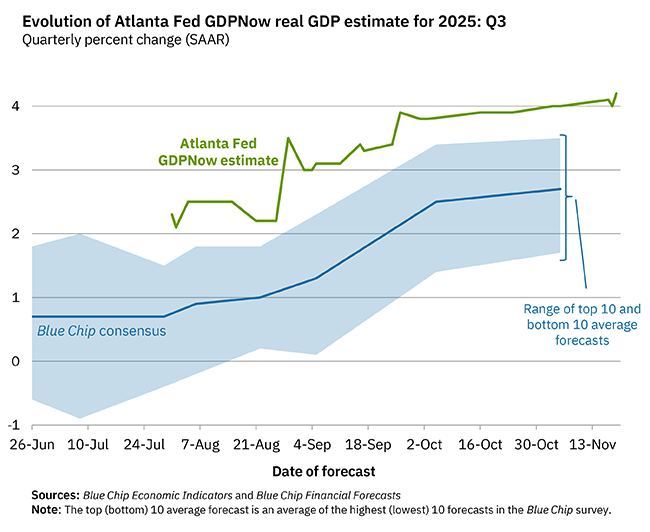
It is difficult to tell how the September jobs report will affect a seemingly fractured Federal Reserve FOMC board when they vote in December.
I do think they will cut .25% BUT, as the bond and betting markets are telling us, that is no longer to be expected.
One anecdote: another Fed Governor announced his retirement last week, adding fuel to the rate cut chances in the Spring.
Bostic will be retiring in the new year, removing another less dovish member from those who decide interest rates. Bostic actually used to be a mild dove (pro-growth and favoring lower rates), but has become more hawkish during this Administration. Unfortunately, his stance change appears to have been more political than data-driven. Good riddance.
This retirement is expected, but nonetheless, it will drive more enthusiasm at the Fed come Spring in favor of more dovish/pro-growth and lower interest rate monetary policy.
And a new 2026 Fed voting member, Philadelphia Fed President Anna Paulson, just publicly signaled her dovishness, saying “[she supported cutting rates at the last two meetings and remains] a little more worried about the labor market [than inflation.]”
She also noted, “Historically, when job gains are concentrated in acyclical sectors like healthcare, that is a precursor to a slowdown.”
Bullish for more rate cuts in 2026.
But, count my skeptical ears perked for further labor market cooling.
Rate Cuts: When A Portable Mortgage Makes Less Sense
I LOVE the idea of a portable mortgage.
Again, we are in year 3 of the lowest home sales activity on record.
This is because of high interest rates, combined with higher prices (which is a result of the government’s wild $10 trillion anti-COVID economic stimulus/spending response during 2020-2022, as I have written about many times before).
FHFA Director Pulte is actively researching how Fannie and Freddie could help incentivize banks to offer/allow portable mortgages.
Counterpoint: Of course, if rates continue to go lower, it makes less and less sense to concern ourselves with a portable mortgage. I have an 8% loan on a property I bought 2 years ago, which I am about to refinance. But I also may sell it, as I have just finished renovations and have a ton of equity accrued. If I do, I certainly would not want to port my mortgage. And neither would anyone who would be moving from an existing home they purchased in the last 3 years.
So as rates slowly tick down into the 5.xx%, we likely won’t need any of this fancy portable stuff. Not nearly as urgently, at least.
But for the foreseeable future (next 12+ months) a portable mortgage makes a LOT of sense, and will spark supply and demand of existing homes.
Importantly, to incentivize banks getting on board with allowing portable loans, the FHFA should allow/incentivize some bank transaction fees because the bank needs to pay loan officers and servicers to complete these transactions and offset some additional risk and opportunity costs associated with portable mortgages vs new loans they otherwise would have made.
So I say, let’s get portable!
BUT….My posture: Don’t bank on policy miracles. It will be hard for the Administration to get this over the finish line. Focus on smart investing now—house hack, buy right, focus on adding value (which is under your control), and always crunch the numbers assuming today’s high interest rates remain.
Oh, and hire a great real estate broker. One who is investor-friendly and can find you deals and strategies that cash flow. Drop me a note and I’ll help you find one, anywhere in the US.
And again, there will be no article next week. I know, I know, but you will survive.
Until next time. Stay Curious. Stay Skeptical.
Herzliche Grüße,