Mortgage Rates Back up to 6%?

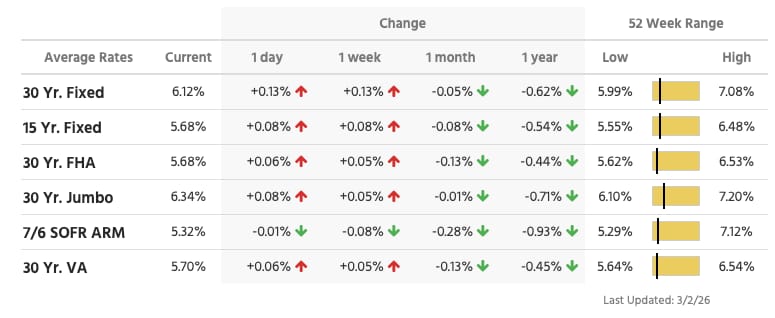
Today’s Interest Rate: 6.12%
(👆.13% from this time last week, 30-yr mortgage)
This week, we’re talkin’ Middle East conflict part 1000, energy and inflation, and separating investment signals, headlines and noise.
Let’s get into it.
The Weekly 3 in News:
Open Door launches a 4.99% mortgage product (Pomp)?!
Zillow projects average U.S. home prices to rise a slower +.9% in 2026. But there's always a growth market somewhere (Zillow).
Nashville News: Tennessee is rated the best state to start a family (IFS)!
Just woke up, I miss anything?
I’m still out in Montana’s mountain country for another day, but I couldn’t miss a chance to provide some [un]solicited opinions on the goings-on.
Noise or Signal?
Whelp…what a difference a [couple] day[s] makes….
Late last week, we finally made the round trip back to 5% interest rates.
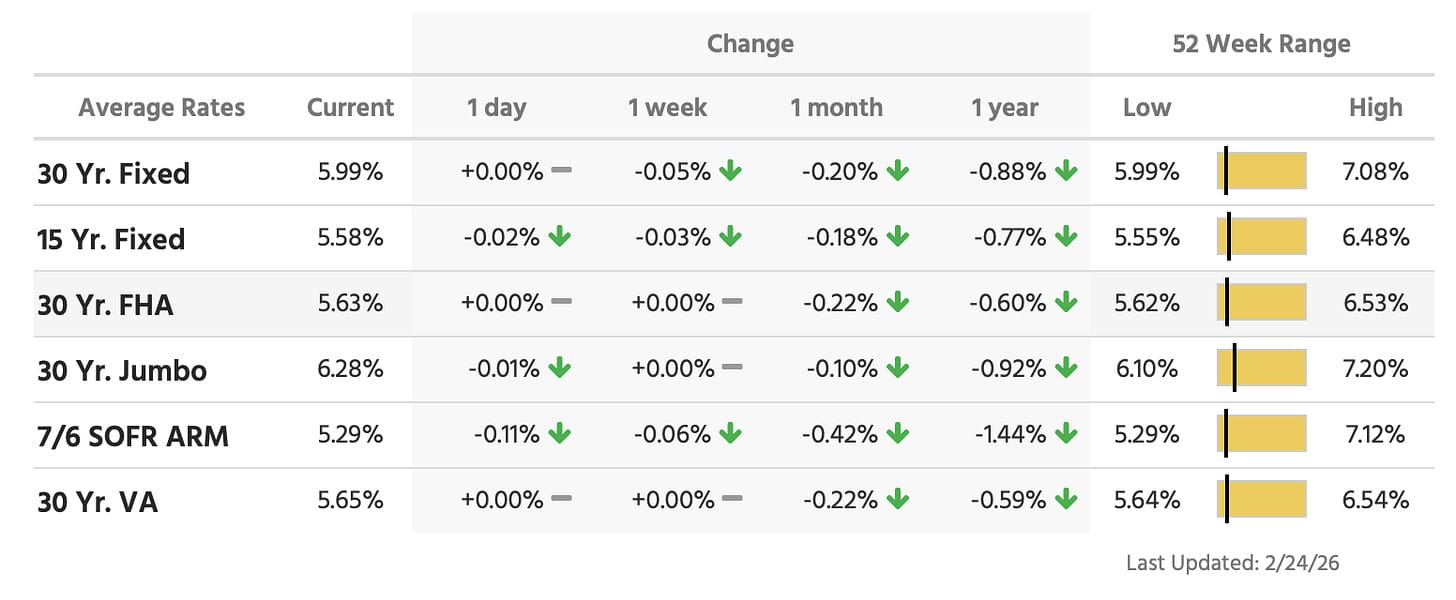
And here’s where we are today.
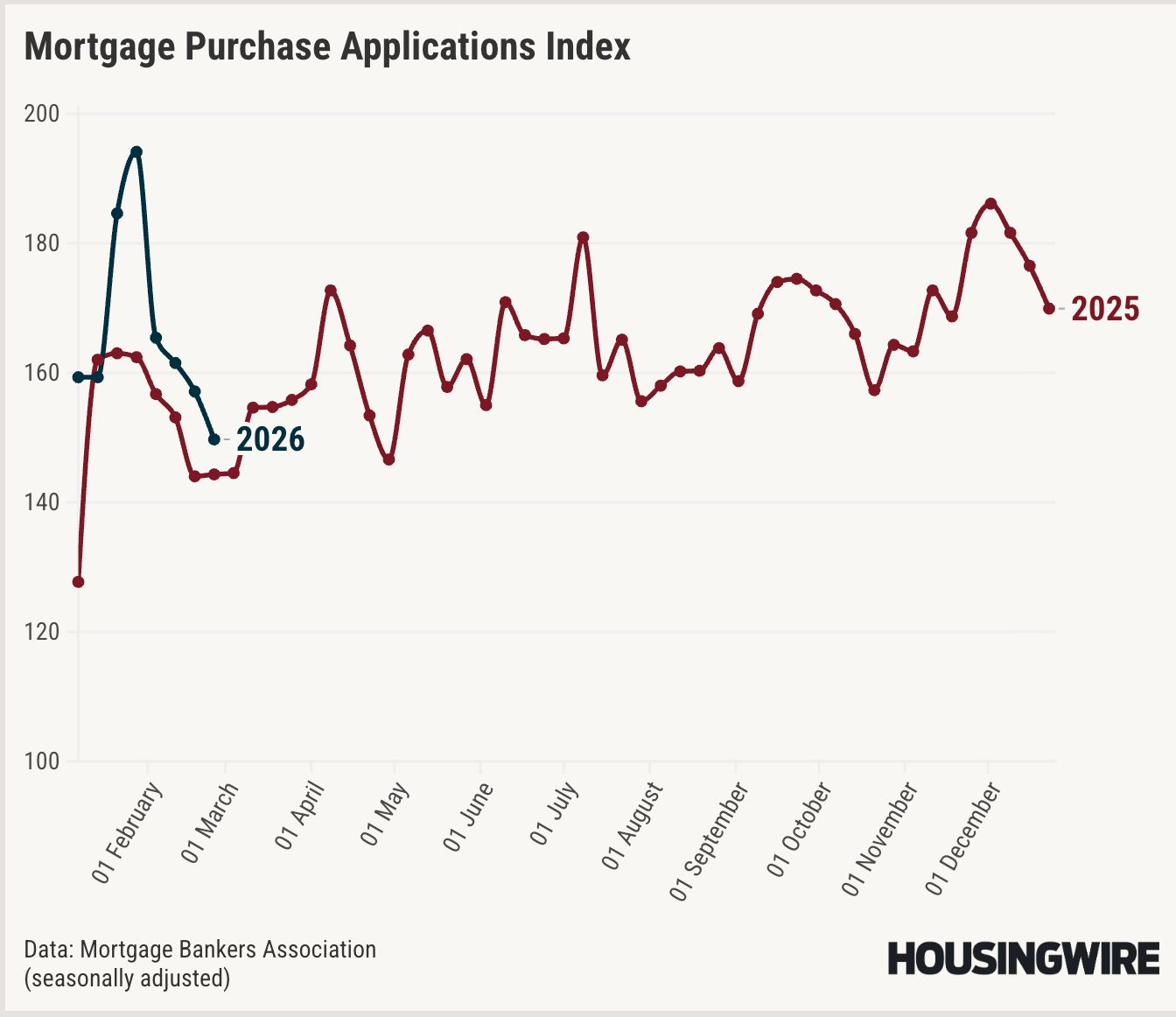
And just when the 2026 market was starting to heat up.
Pending mortgage applications had been above their 2025 levels, spiking up in February as rates continued to ease.
And then…
Ah the humanity!
6% Rates…What Gives?
Bond market participants are selling off 10-year Treasury bonds hard today, which raises the interest rate it pays, and like a rising tide, this brings up the interest rate investors will require for competing assets, like mortgage securities.
Bond prices and yields move inversely.
As I write, the 10-yr Treasury bond is trading at 4.057%, up from 3.96% last week.
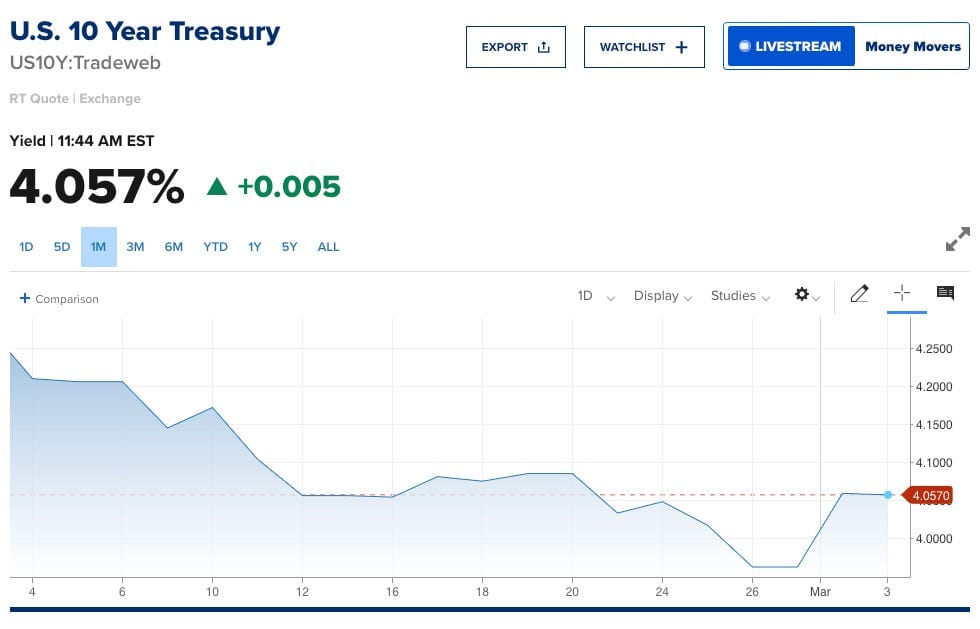
Remember, mortgage rates track the 10-yr Treasury rate, not the Federal Reserve’s interest rate (the Fed Funds Rate), as they are competing assets investors buy for a relatively low-risk or risk-free return, respectively.
So why are investors shedding Treasuries?
Oil.
Let me explain.
Inflation Worry Redux
Now, ordinarily, wars and geopolitical events spark uncertainty in the market, triggering a flight to safety, ie investors buy the safest asset in the world, the US Treasury bond.
This actually would make interest rates plummet.
But, when the conflict itself may be inflationary, and investors perceive the level of national security danger from the events to be minimal, investors favor the former as the greater threat to their investment dollars.
Why?
Inflation erodes the value of bond interest payments, which stay fixed throughout the bond’s life, regardless of what happens to prices in the economy. Inflation means prices for goods and services rise over time. When prices go up, each dollar buys less than it did before — a loss of purchasing power and wealth.
Hence, if one fears future inflation, sell sell Treasuries.
The Oil and Gas Delimna
The conflict in the Middle East has market participants concerned about future oil and gas prices.
Oil and natural gas are the primary means of energy production in the world, and the primary input cost to producing goods and providing services - from milk and manufacturing, to construction labor and package delivery - is energy.
Energy is like gravity; it affects everything.
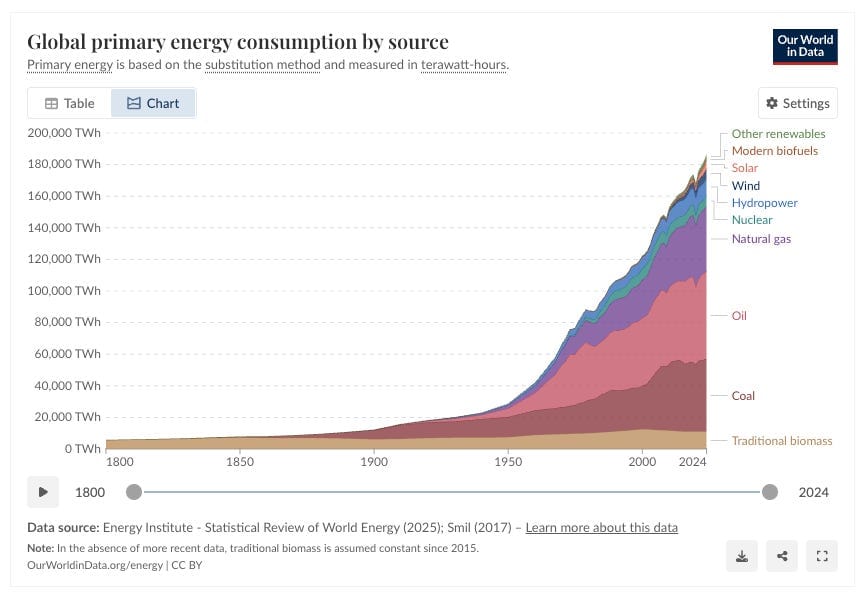
And the global energy market is a tangled mess of interconnected parties where rising prices in one area affect the total market.
The China Problem
One of the world’s largest guzzlers of oil is China.
But China does not produce much crude oil domestically. They just don’t have it.
So they import it.
And, perhaps coincidentally (perhaps not), of all that imported crude, 80% of it has to pass through the Straight of Hormuz.
Which is now shut down.
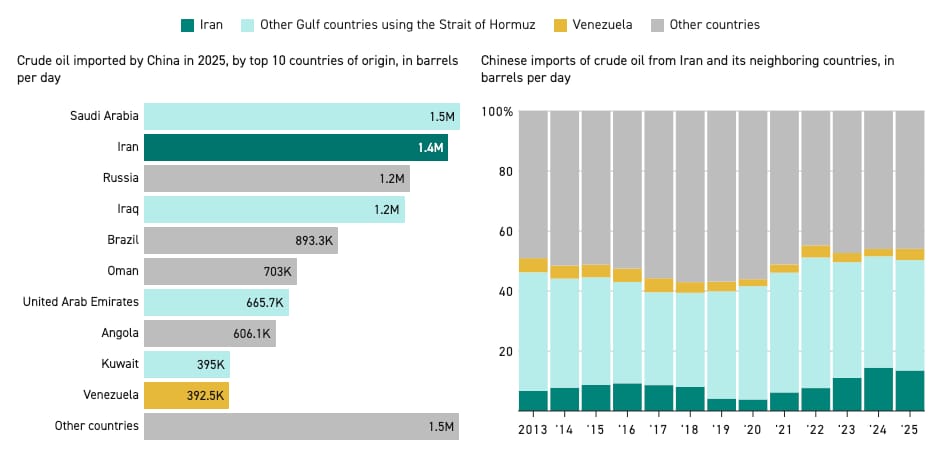
And, further, much of China’s oil imports come from Iran directly. In fact, China buys nearly 90% of Iran’s total exported oil.
So, if they need to (and they will), they will pay more to buy it from other sources, which will lift global oil prices.
Another major exporter to China?
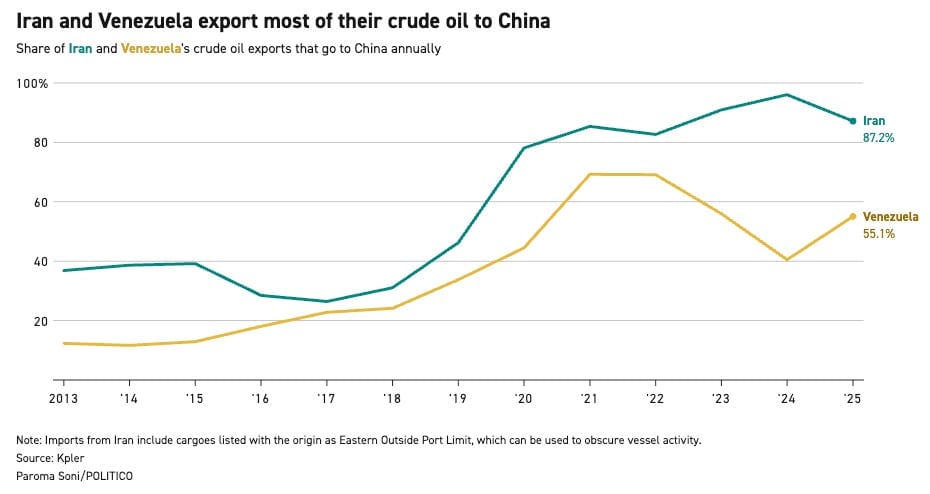
Hmmmmm, I seem to remember something about them and us in the news too… 😬
So, China has a problem today, which hopefully will be helpful in future negotiations.
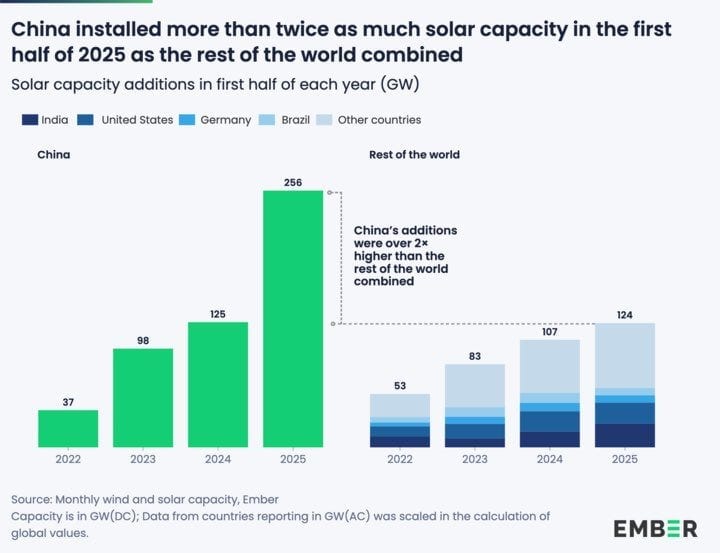
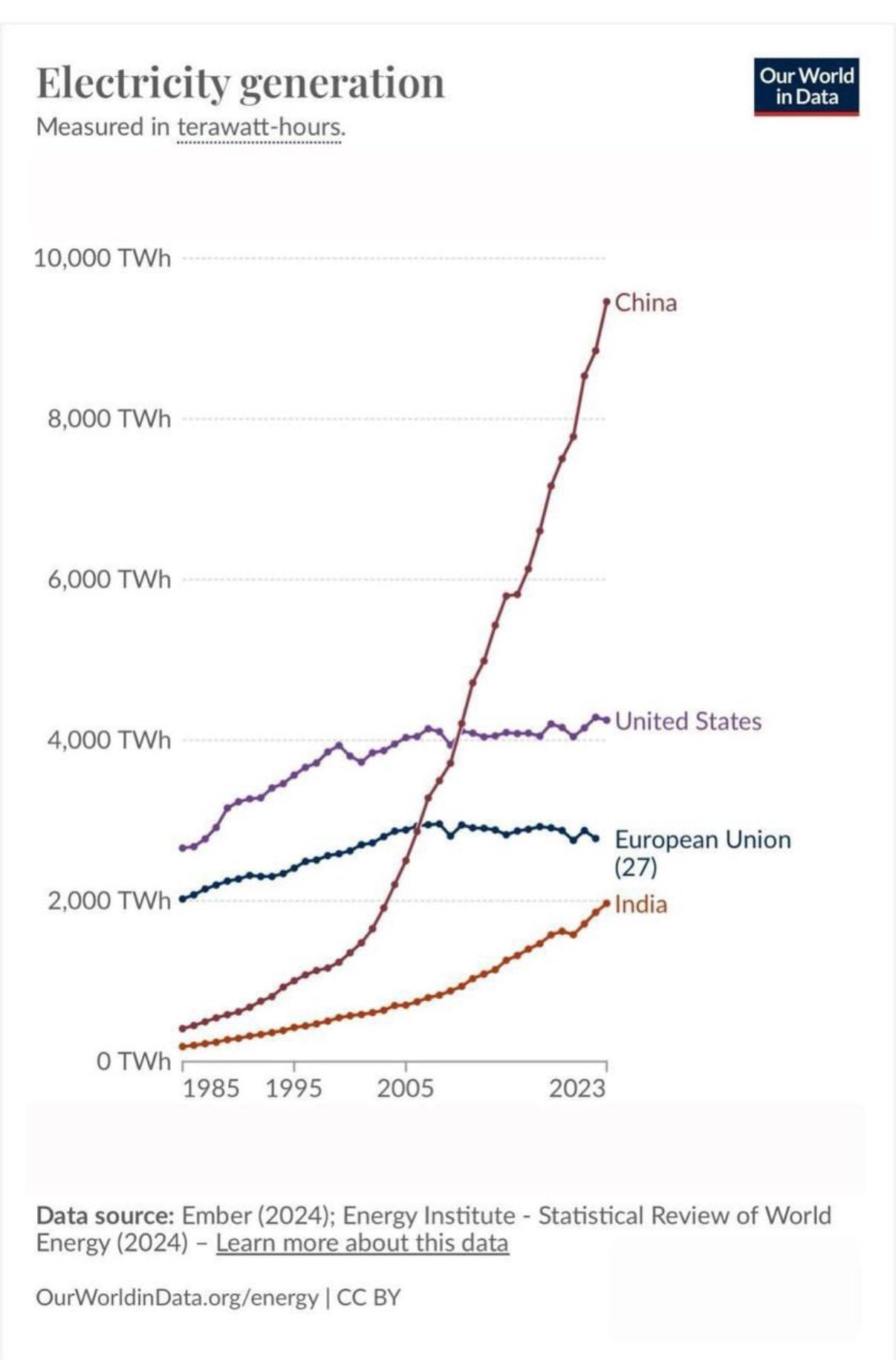
As an aside, this is the primary reason they have invested so heavily in solar, nuclear, coal and electric cars in the past 10 years.
Solar:
Coal:
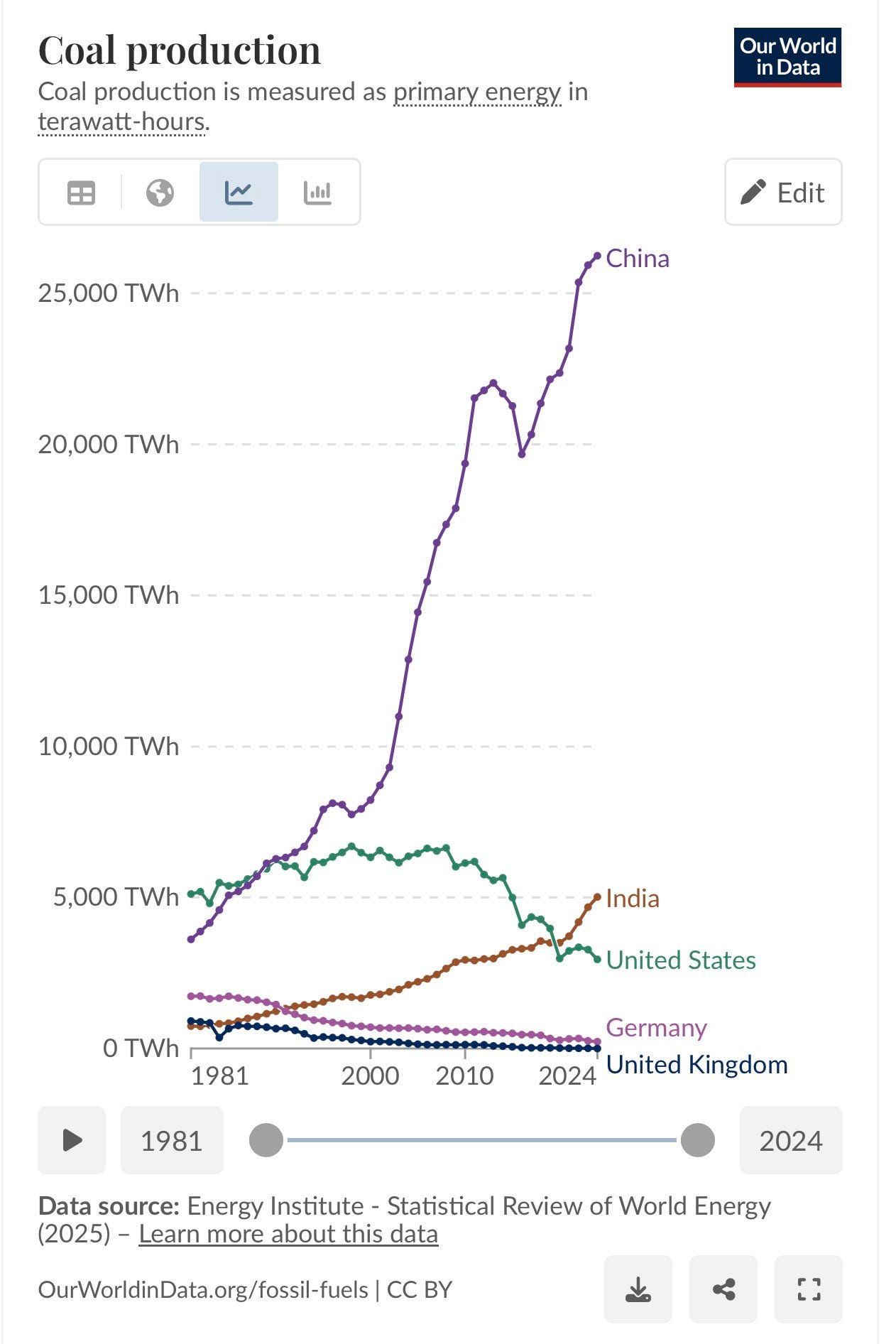
They are expanding electricity generation exponentially. Just look at this chart.
Total:
Natural Gas Prices: The Qatar Concern
Natural gas prices, too, are not immune from this conflict.
Qatar, the world’s largest liquid natural gas exporter (~ 20% of global supply), just announced it has halted all liquefied natural gas (LNG) production after Iranian drone strikes hit 2 key facilities in the country.
As of this writing, the supply was still shut down.
Now, this was a precautionary shutdown in response to the attacks, and likely temporary, but this kind of supply disruption is compounding energy price concerns, especially for countries that rely on LNG for electricity/manufacturing.
Importantly, in the US, we have plenty of domestic natural gas, but again, this is a global market, and energy prices will rise, even if we are relatively insulated.
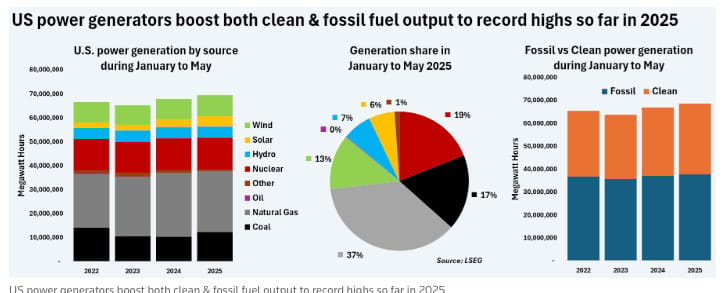
In the US, natural gas makes up a large part of electricity generation.
My Skeptical Take:
Fortunately for us Americans, this is not as much a national security problem as it is a potential inflation problem. Again, I’m avoiding politics here; I’m always just looking in from an investment perspective.
Inflation is once again THE concern for the market today.
But how likely is it to persist and what will be the magnitude?
Unknown.
It depends on the depth and breadth of our engagement in this conflict.
And be skeptical of the pundits.
Anyone who tells you they know how long this will last and what extent our involvement will be is not a serious person.
War is by definition undetermined.
What is known is that while recent swings in energy commodities have not yet reached consumers’ receipts, this conflict in particular has the power to move markets, prices, and interest rates.
And it’s already started to push gas prices higher.
Rising transportation costs are expected to follow, passing costs on from fertilizer, food and other goods in the weeks ahead.
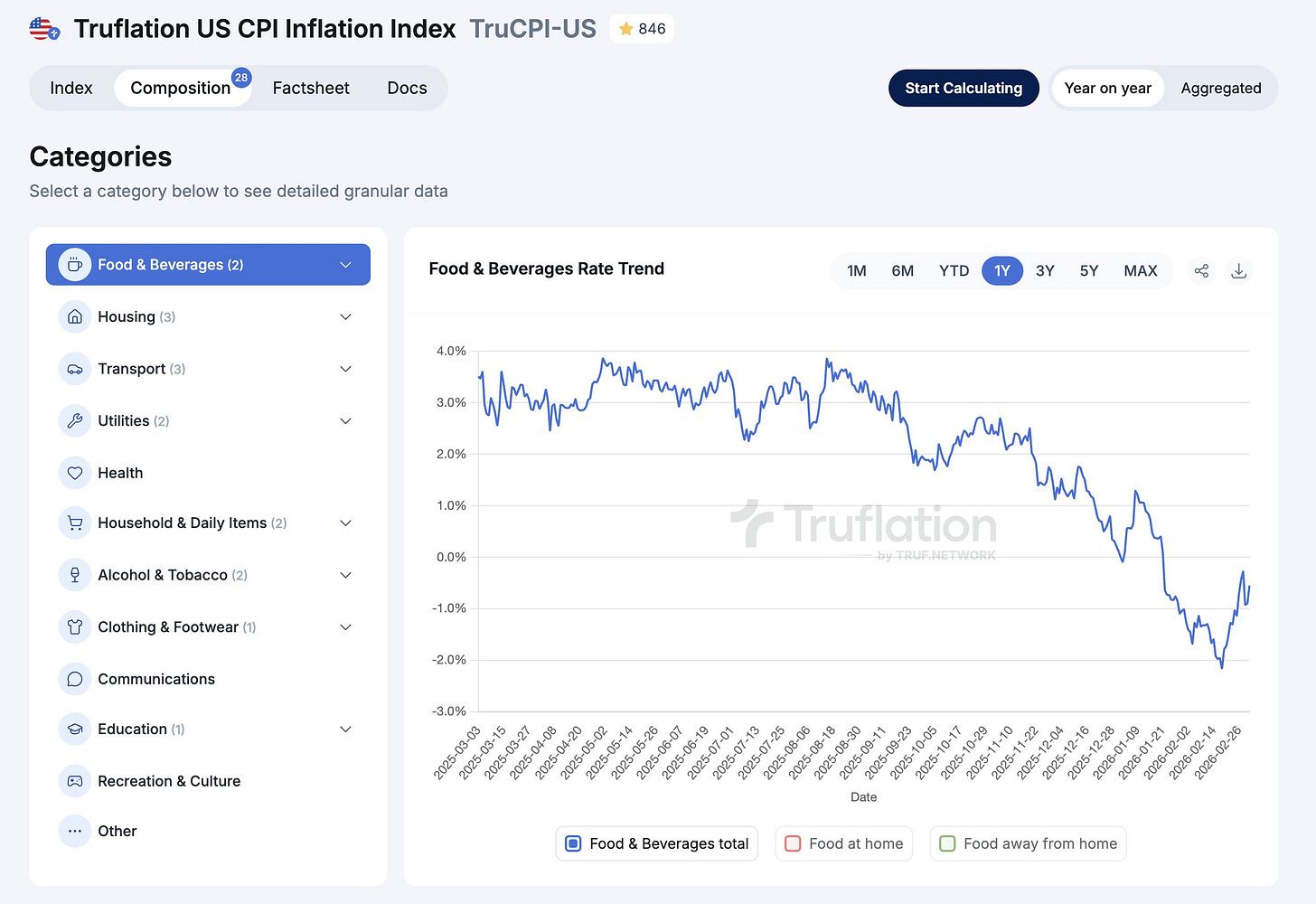
Case in point: food prices edged up slightly today.
The primary mover of markets is the strangle on global trade via a blockage of the Straight of Hormuz, and to a lesser extend the flow of Iranian oil.
If the conflict is short-lived, this effect will be fleeting and will subside.
But if not, it could be much more significant.
Now, I don’t expect this critical trade route to be closed for long.
But you never know…
Then again, I’m a gambling man, so all this being said, let's have a little fun and make some predictions based on my experience in government and the real estate industry for the last 20 years (not investment advice!)
This conflict is noise.
Not signal.
I am still holding on to my prediction of lower mortgage rates in the mid-5s by year’s end.
This conflict will not disrupt global trade in the area past 30 days, likely fewer.
But then again, you never know.
For me, I am trying to remain grounded and focused.
I’m ignoring the salacious headlines and not letting emotions affect my judgments.
Because, just like miss Dinah sang, what a difference a day makes…and the difference is you.
You have faculty over your own life.
Stay based, remain true to your investment thesis in this time of uncertainty.
Until next time. Stay Curious. Stay Skeptical.
Herzliche Grüße,