Middle East Crisis: The Wall of Worry

Today’s Interest Rate: 6.14%
(👆 0.15% from this time last week, 30-yr mortgage)
This week, we’re talkin’ global oil prices, inflation potential, and why global shipping insurance is the big issue folks are sleeping on.
Let’s get into it.
The Weekly 3 in News:
Tax refund season has started! Average tax refunds are up 10.6% to $3,742, early filings show. This is expected to grow as more complex returns are filed throughout the year. Economic analyses show folks are likely to spend ~30% of these refunds back into the economy (CNBC).
Nashville News #1 - Starbucks is expanding to Nashville with a new corporate operations office later this year. “Companies across the nation recognize that Tennessee’s strong values and fiscally-conservative approach are good for business, and we are proud to welcome another Fortune 500 company like Starbucks to our state,” said Gov. Bill Lee (TNECD).
Nashville News #2 - Audio giant Sennheiser moves Americas hub to Rock Nashville, from Connecticut. The Germany-based audio company will invest $2.5 million and create 25 jobs (BizJournal).

The Wall of Worry
Well, we are 1.5 weeks into this conflict, and the market is still very much on edge over levitating oil prices.
Building on our discussion from last week, the Strait of Hormuz is a narrow waterway between Iran and Oman that’s crucial for global oil transport, handling about 20% of the world’s seaborne crude oil / natural gas, and 80% of oil imports to China.
Disruptions (or the worry over potential disruptions) there can spike global oil prices, which in turn affect US gas prices.
(Don’t worry, this is important for us real estate investors; keep reading).
The Global Oil Market
Even though the US does not rely on oil supplied from the Middle East anymore (we have been a net exporter of fossil fuels since ~2019, and the world’s largest producer since 2017), oil is a globally traded commodity, priced on international benchmarks like Brent crude, rather than isolated domestic markets. When supply is disrupted anywhere, it reduces overall global availability, creating a supply deficit that drives up prices worldwide as buyers pay more to buy from other sources. So, this isn’t about oil needing to be supplied back to the US; it’s about basic market dynamics. US producers and refiners sell and buy at these global rates, so higher world prices mean higher costs get passed to US consumers at the pump.
While the US produces a lot of oil (more than any other country) and exports surplus, it still imports crude—about 6-7 million barrels per day recently—to match refinery needs. Much of US output is light, sweet crude from shale, but many refineries, especially on the coasts, are optimized for heavier, sourer grades from places like the Middle East or Canada. So, the US exports its lighter stuff and imports what it needs, keeping it tied to global supply chains. Disruptions in the Strait mostly affect flows to Asia, but the ripple effect hits everyone.
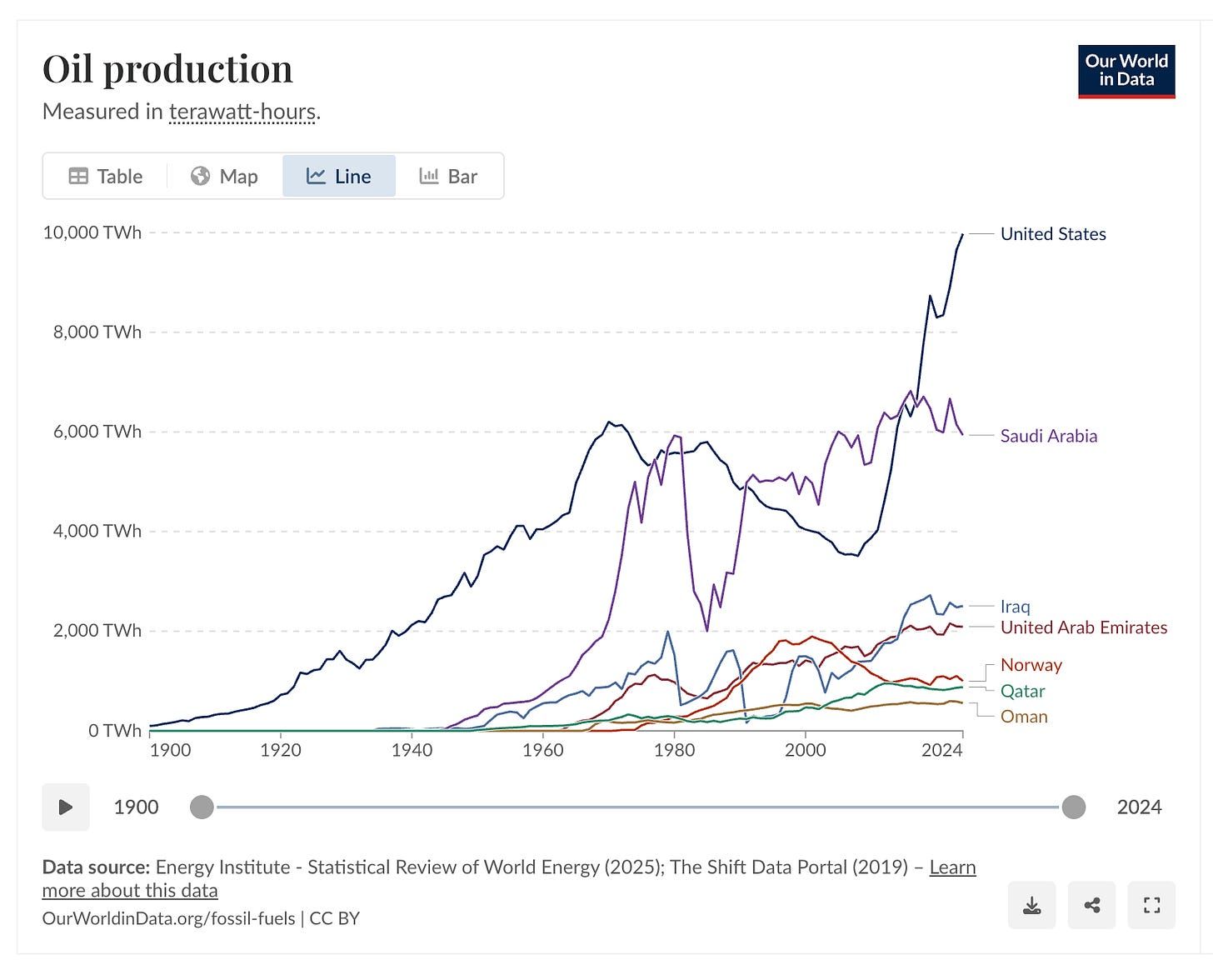
In the current crisis, Brent crude has jumped over 25% to around $100 per barrel (this is rapidly changing; numbers may be higher/lower once published) since the conflict escalated, pushing US gas prices up from about $2.98 to $3.32 / gallon nationally.
For context, every $10 rise in Brent typically adds roughly 24 cents / gallon to US pump prices.
US oil producers might benefit from the higher prices, but everyday drivers and the broader economy feel the pain through inflation and increased costs. If the Strait stays disrupted longer, some analysts predict oil could hit $120+ per barrel, amplifying the impact.
Here is a 10-year chart of oil prices, for context.
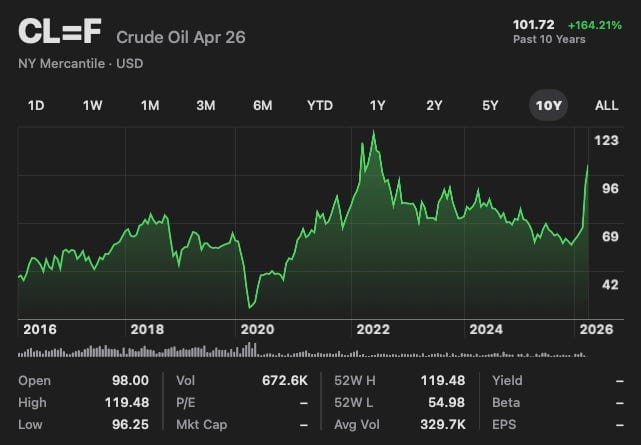
Gosh, that happened quickly (and can crash as quickly too).
Here is the week’s chart, showing our peak last night, and prices (hopefully) tapering off.
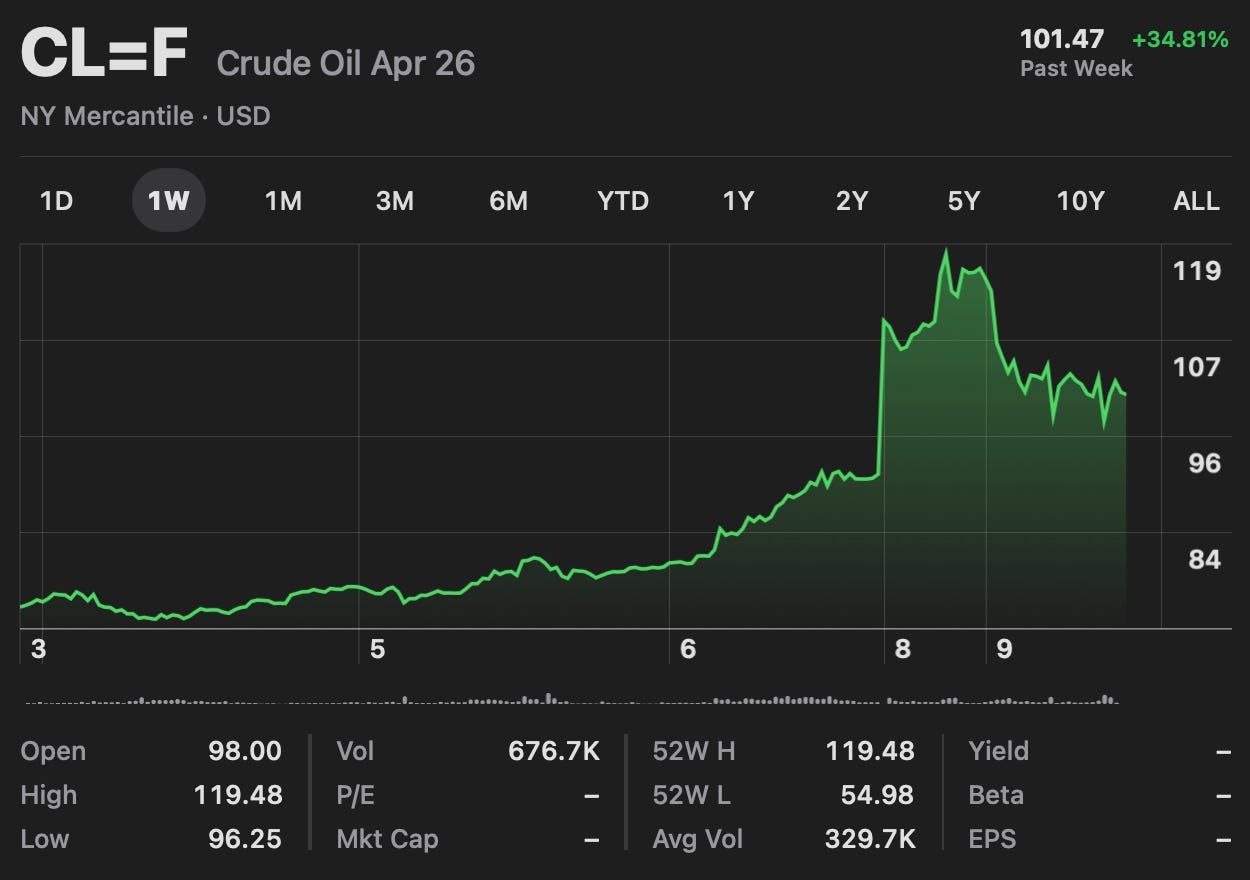
And insurance companies are partly to blame.
Keep reading.
The Insurance Problem
Only a handful of oil tankers in the region have braved the Strait of Hormuz (all successfully).
Why?
It’s not because the Iranian Government was able to “close” the Strait.
It was…. Insurance?
Yep. Insurance companies revoked their “maritime war risk” coverage from shipping companies shipping oil in the region.
Yes, that’s a thing, and apparently it doesn’t cover….checks notes… wars?
I’ll explain.
Maritime war risk insurance is designed to protect against perils excluded from standard marine policies, such as collisions, weather, machinery, and your precious Amazon cargo. War risk policies provide protection for events like armed conflict, terrorism, piracy, civil war, hostilities, detention by foreign governments, mines, torpedoes, or passive-aggressive tweets (well, maybe not that).
Lloyd’s of London is the world's largest specialist insurance market.
And it’s not that the shippers don’t want to say, screw it, and brave the Strait and take the risk.
They might.
The problem is, almost all shipping companies are levered (like almost all real estate) and the bank that loaned the shipping company the money to buy the ship requires the shipping company to hold maritime war risk insurance.
So, when the insurance companies pulled their coverage. Shipping companies couldn’t continue operating because if they did, the bank could call their loan due and take back the ship they loaned on.
This reminds me of real estate…hmmmm…
Oh yeah… me trying to get fire insurance on a property I have in California.
My fire insurance has been dropped 6 times in 4 years due to… checks notes… risk of fire.
Ah, insurance companies…gotta love these guys….
A Solution In Sight
Thankfully, the US government has recognized this risk and, similarly to US flood insurance for real estate, is stepping in.
To restore oil shipments through the Strait, the US administration has just announced a reinsurance backstop to cover potential losses for insurance companies, thereby reassuring banks that finance shippers and supplementing private market coverage.
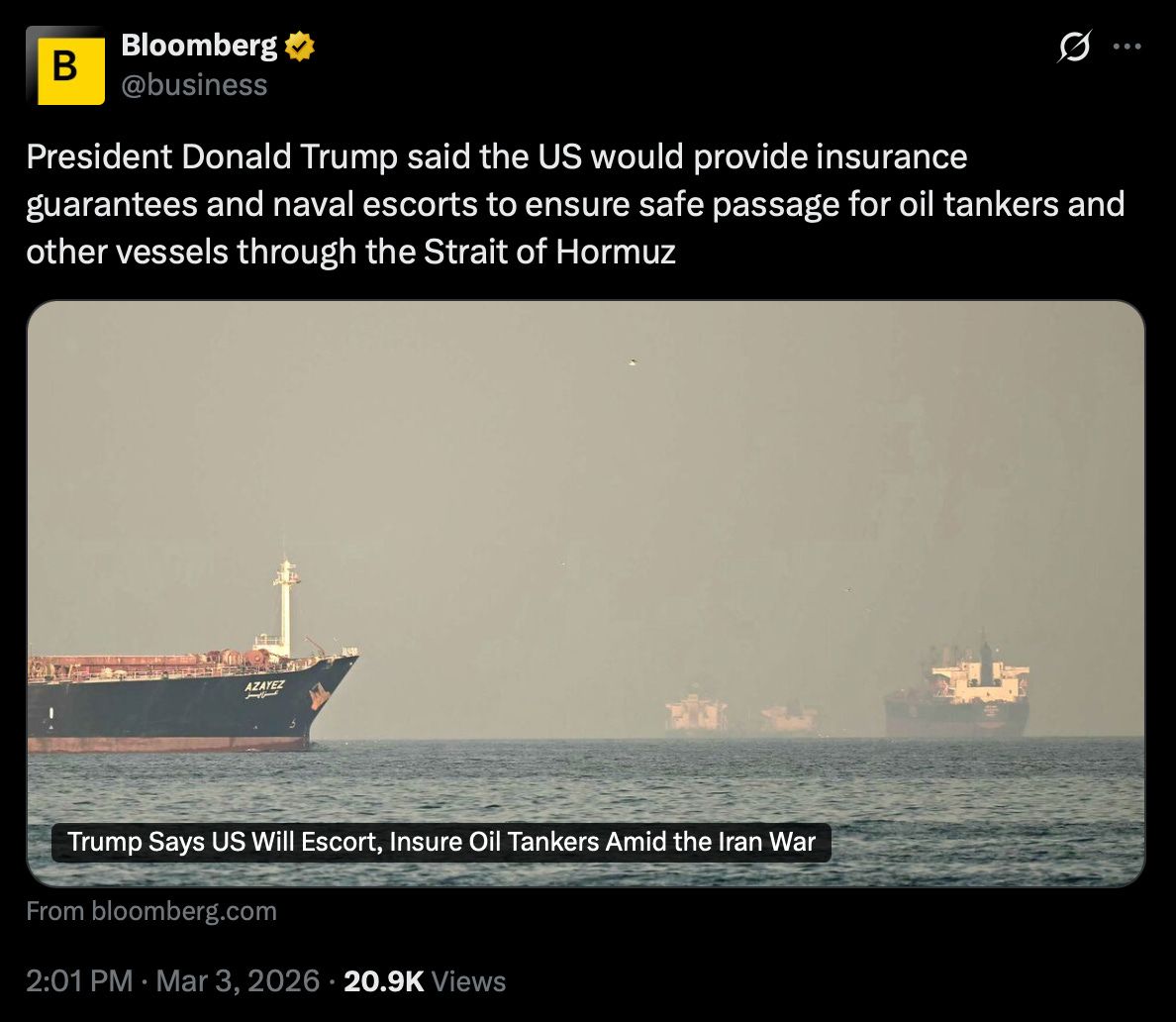
Additionally, the US Navy stated it would begin escorting tankers through the Strait “as soon as possible” if needed, to provide physical security alongside the financial safety net.
This is being rolled out now, and hopefully, with the destruction of the Iranian Navy, will begin to loosen up tanker traffic as soon as this week.
Market Hanging on to Inflation Worry
And this insurance backing can’t come soon enough.
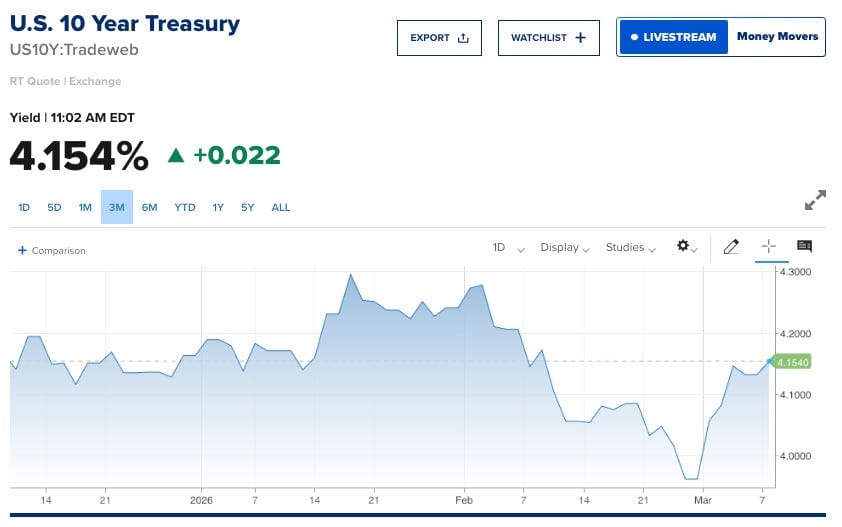
Until energy flows restart, inflation is a key risk the market is pricing in.
Just look at that spike in interest rates since the beginning of March, over energy cost worries.
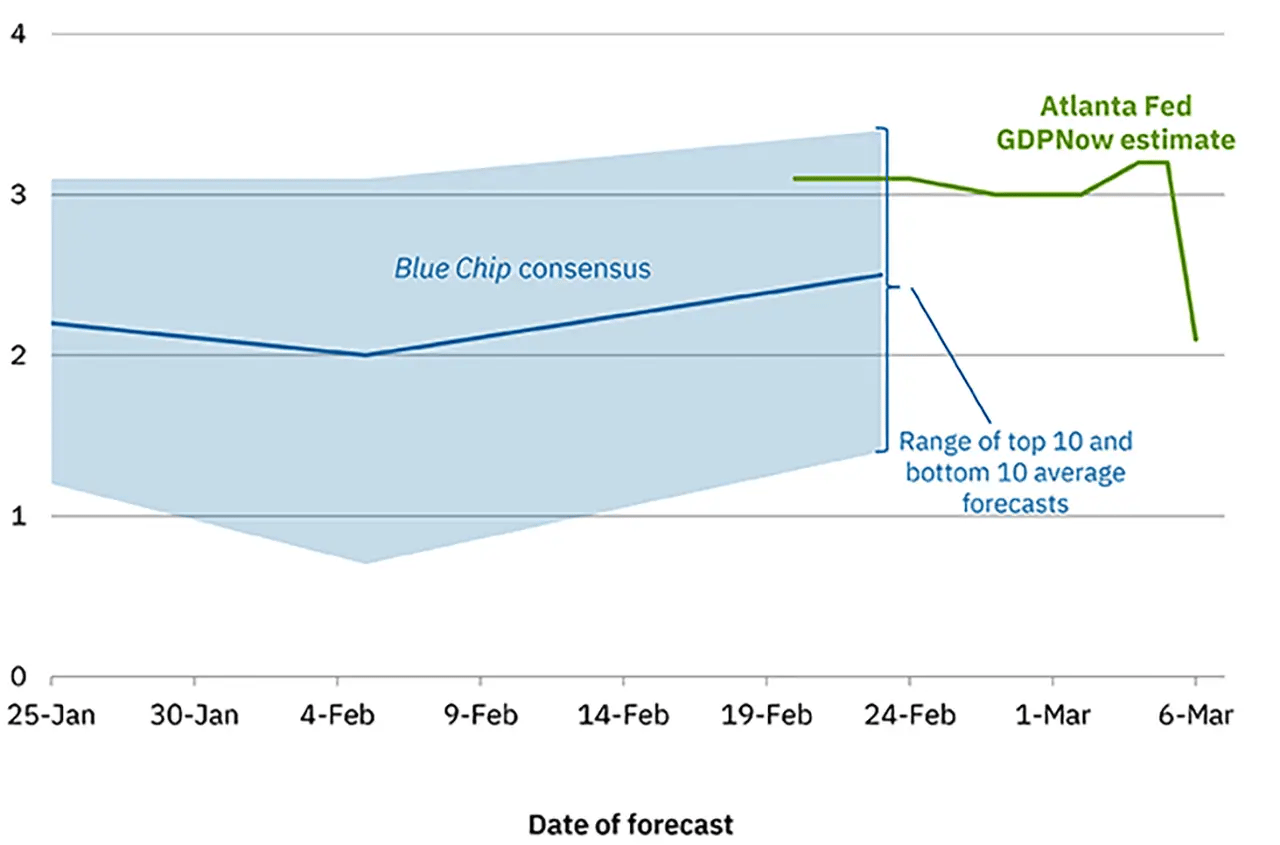
Continued inflation could meaningfully affect US growth.
Just look at the Atlanta Fed GDP estimate, which has been revised down a full percentage point for Q1 2026, from 3.1% to just 2.1%.
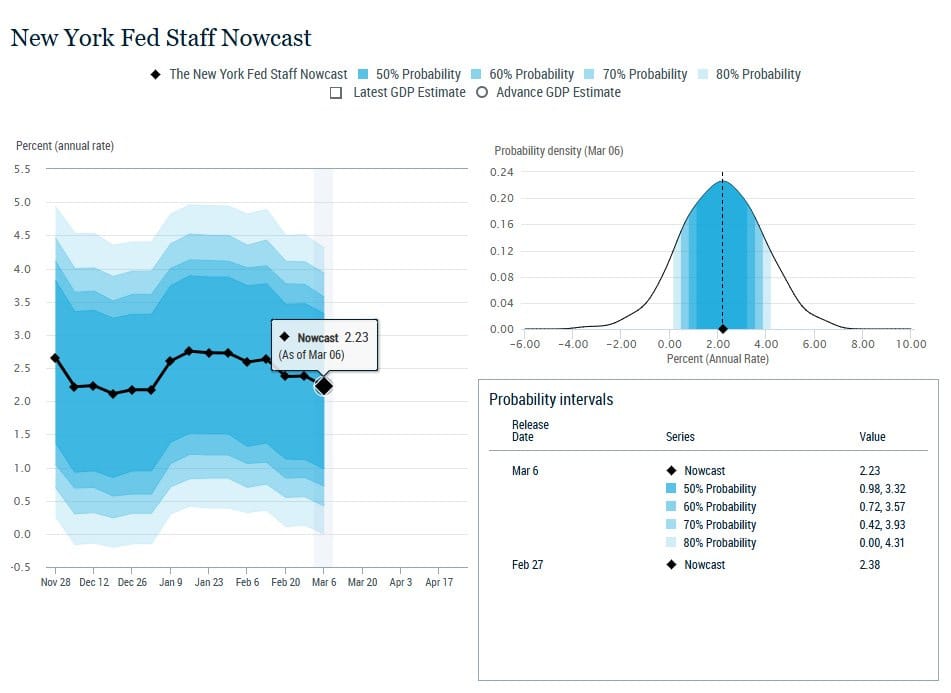
Following suit, the NY Fed revised its GDP estimate down to 2.23%.
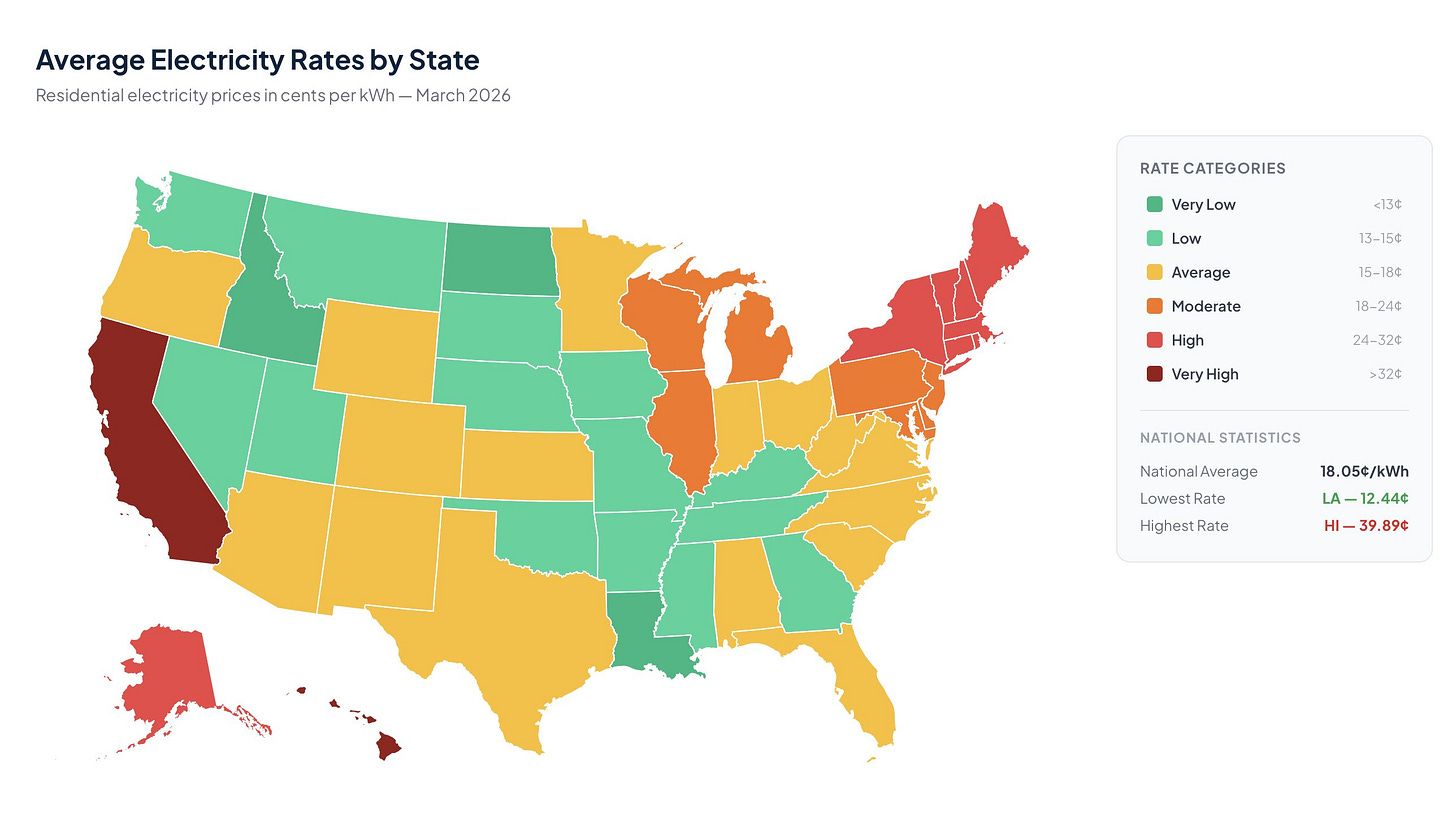
Quick Energy Fact: How about electricity prices?
Oil prices shouldn’t affect your electric bill tomorrow. The US produces all it needs here domestically (coal, natural gas) and renewables (wind, nuclear, solar…) require negligible oil to operate.
BUT, if for some reason this were to become a protracted conflict, which is highly unlikely, remember oil is used to construct everything, and would therefore have a considerable effect on the construction of all things involved in electricity generation, transmission and distribution.
But for now, no effect.
Although, it does depend on what state you live in. My bill here in Nashville is 1/3 that of my folks in CA.
Worry #2: Labor Market Cracking Further
Friday, we received the latest jobs report, and the results were far below expectations.
The BLS data showed a loss of 92,000 jobs, vs 50k expected, and far below the quite encouraging number of +126k in January.
Importantly, employment for December was revised down from +48,000 to -17,000, erasing 65k jobs we thought we had created in Q4 2025.
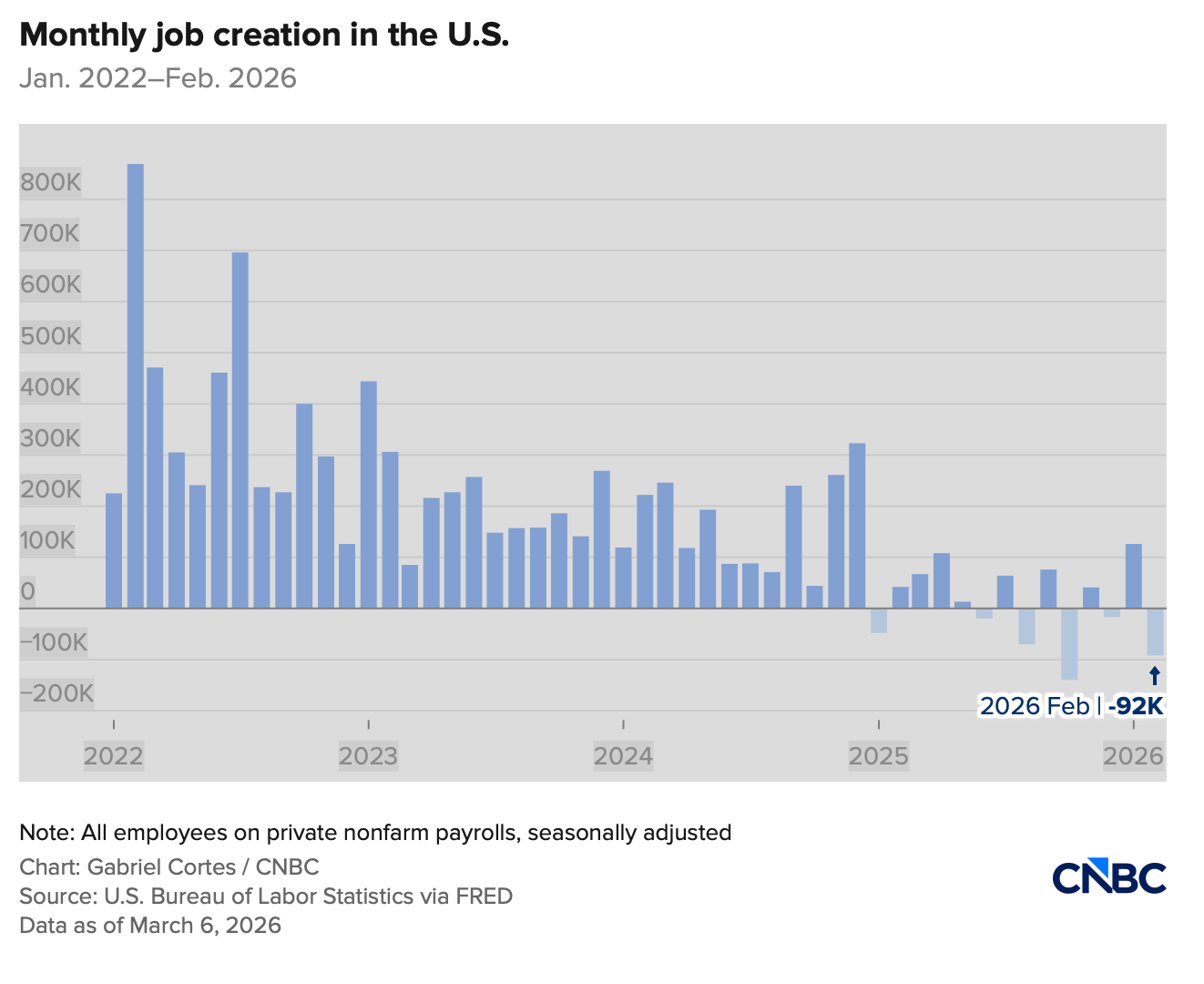
Worsening jobs numbers were paired with a very slight tick up in unemployment, which is at 4.4%.
Bad weather and employment in health care strikes on the West Coast could have been to blame, per the BLS, but still, this is not good.
But, some context here would be helpful.
We are still at historically normal unemployment rates. 5% unemployment is considered “full employment” in economics, as new market entrants (ie college graduates), folks switching from job to job, etc…At this point, the labor market is tight enough that nearly everyone who wants a job can find one at prevailing wages, but not so tight that it sparks wage spirals and runaway inflation.
Too low an unemployment number can lead to higher inflation, as businesses compete fiercely for scarce workers, driving up wages, which then pass through to higher prices. Case in point, the Federal Reserve has historically targeted an unemployment rate of about 5.0-5.2% as indicative of full employment.
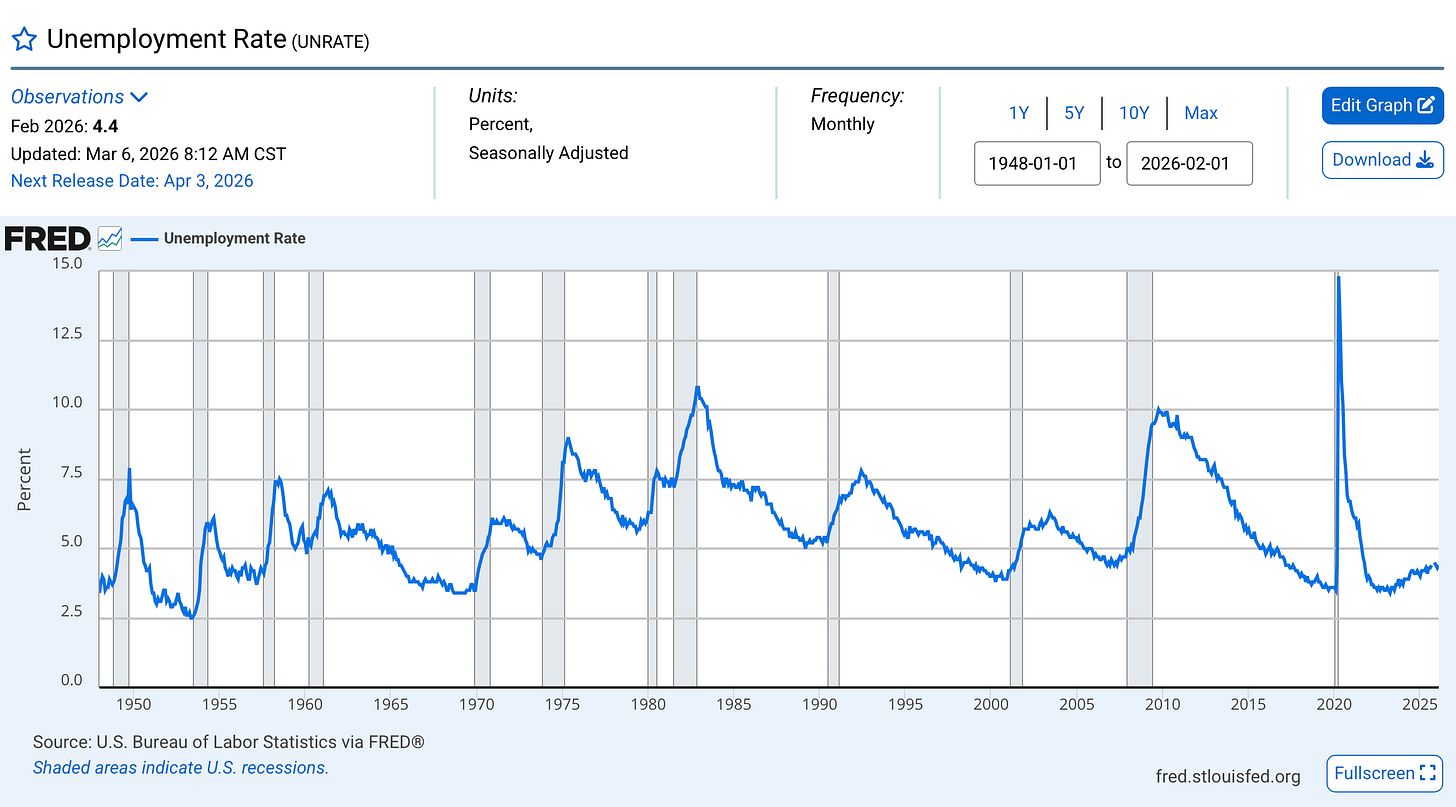
But this unemployment trend is not good.
One silver lining: Wage Growth
Counterintuitively, wages rose more than expected last month.
Average hourly earnings increased 0.4% for the month to 3.8%, both 0.1 percentage point above forecasts.
Now, this is positive.
Average hourly earnings were quite strong in February, and generally have been strong.
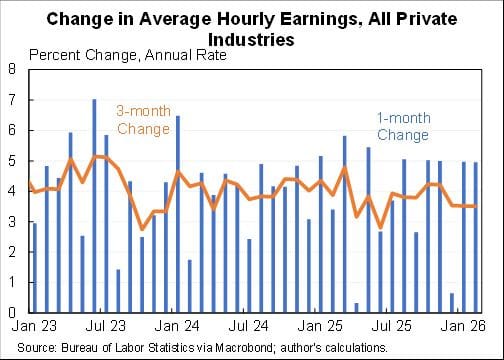
This is not what we expect in a weak labor market.
But it is indicative of the recent mantra: “No hire, No Fire,” which analysts have been preaching in the media.
And that may be a good way to put it.
We have unemployment trending higher, rising wages, flat hiring, yet... increased productivity?
Oh yes, that hasn’t gone away because we started a war with Iran.
AI Starting to Boost Productivity?
Yep, it looks that way.
Labor productivity rose 2.8% in the fourth quarter, with the third quarter revised upward to 5.2%. This adjustment brings the overall productivity growth for 2025 to 2.2%.
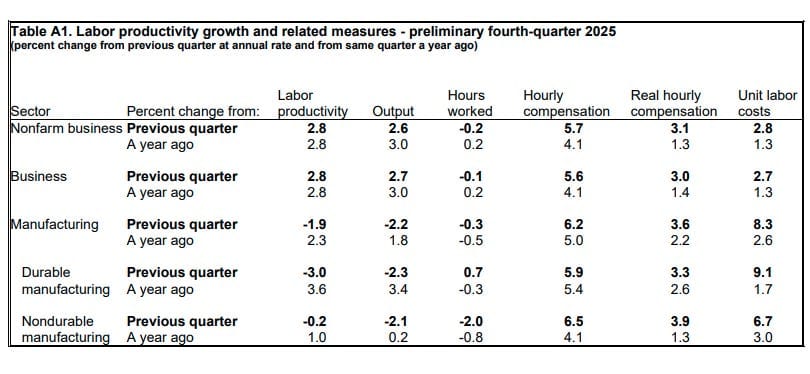
Productivity is showing real signs of accelerating, likely from AI use.
NBA Jam rules are about to go into effect.

Case in point: US Manufacturing Outlook is Up
Last week, Chicago PMI (a survey of manufacturers) printed 57.7 vs 52.1 expected, up from 54.0.
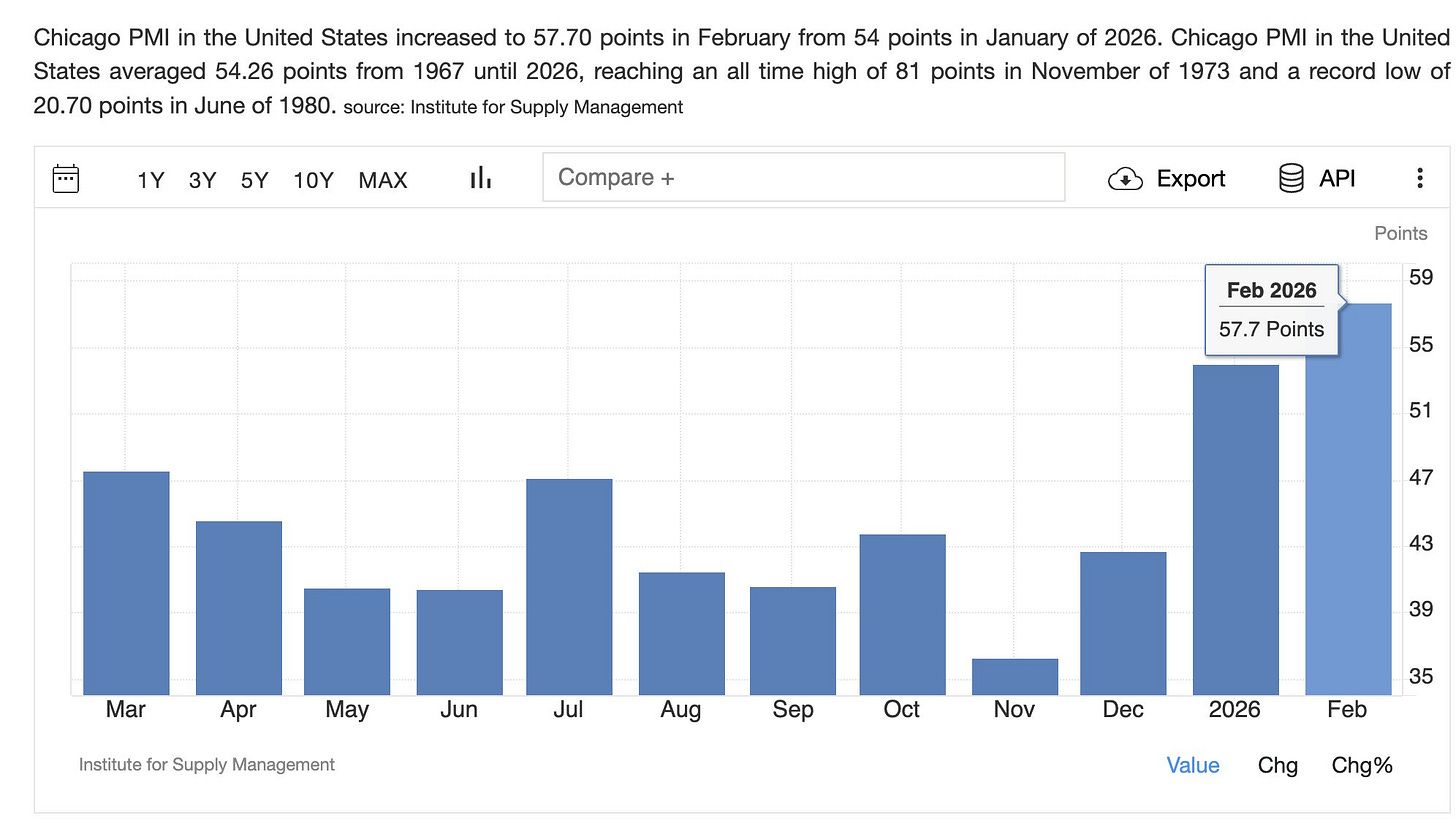
Anything above 50 signals expansion, and this is the highest reading in over 3 years.
Manufacturing is often looked at to determine how efficient the economy is at producing goods and services.
Quick Real Estate data: Mortgage Applications Up
Before I conclude, a look at real estate activity from HousingWire.
Mortgage purchase applications are UP!
+6.1% week to week
+10% year over year
Every week this year has had a positive year-over-year print.
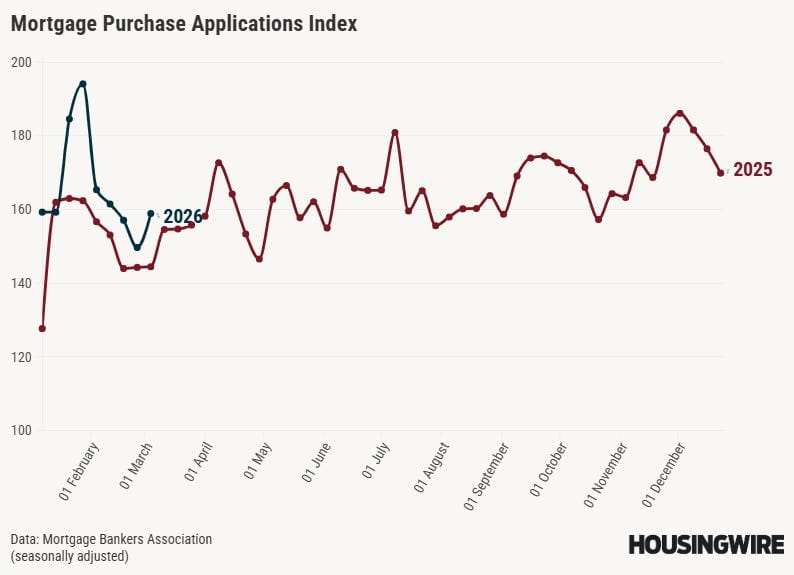
Folks are hitting the Buy My House button now that rates are at 6% and still trending down (for now)….
My Skeptical Take:
So, to recap, we have rising unemployment, rising wages, negative hiring, increased productivity, and the risk of energy inflation.
What is the Fed to do?
In my humble opinion, this is a level 2, red alert for the Fed to CUT RATES.
What the hell are you doing Federal Reserve?!
Whew, that was cathartic.
The recent jobs and manufacturing reports tell a story of an economy in rough stasis, with prospects for improvement in question for workers but more rosy for business profits.
The US economy has been losing jobs since April 2025.
Companies are producing more profits, yet with fewer employees.
Yes, there is near-term inflation risk from oil trade disruption but this is fleetingly temporary, IMO.
Healthy businesses don’t need to expand employee count now because they are becoming more productive, but at the same time, they aren’t conducting mass layoffs (ignore that small fraction who are, like Square).
We need to get ahead of this potential “jobless economic expansion” where workers are left behind and lean into the accelerating productivity gains of AI.
Productivity/efficiency gains allow the economy to absorb higher wages without proportional price increases, enabling the Fed to cut rates while inflation hovers around 2.5-3% rather than spiking. Interest rate cuts will more likely reignite the anemic economic growth without sparking runaway inflation. Lower rates would encourage further investment (especially in manufacturing, AI and tech) by easing borrowing costs, even as wage pressures persist. This creates a virtuous cycle where output rises faster than employment, sustaining and extending economic expansion.
Remember, we are also removing illegal immigrants from the labor pool, catalyzing a unique labor market scenario of rising wages, even as folks leave the workforce.
Therefore, as productivity surges and consumer spending stays resilient, a question I’ve been pondering:
Is it possible for US GDP to grow at a 3% clip, while unemployment rises to 6-10%?
Yes. I now think it is.
Example: AI tech companies like Google, Anthropic and Microsoft are posting jobs for computer programmers paying $500k salaries.
So, it could be that companies hire fewer, higher-performing workers who can utilize AI as cheap labor to assist them, and companies can save overall on their labor costs.
Add to this, the wild acceleration in robotics and a world in which we are so productive we all can work less and have a good life, well, that really starts to take shape.
It’s a wild world out there and an even wilder future.
You don’t know how your industry may be disrupted.
Planning and investing for your future is more necessary than ever.
And last time I checked, AI won’t be able to disrupt being a real estate investor.
Prepare accordingly.
Until next time. Stay Curious. Stay Skeptical.
Herzliche Grüße,